An Ambroxan perfume is a finished fragrance built around an Ambroxan-style ambergris direction. It is a consumer product. The undiluted aroma chemical is a separate raw material, with its own specification and handling record. Keep those two product types apart when scent descriptions are compared with technical documents.
Search results use Ambroxan, Ambroxide, and Ambroxane in overlapping perfume discussions. The overlap matters. BWX lists Ambroxide/Ambroxane under CAS 6790-58-5 and lists Cetalox/Super Ambroxide separately under CAS 3738-00-9.
What Is an Ambroxan Perfume?
The term describes a perfume built around an Ambroxan-type ambergris and woody character. Other materials remain in the formula. They set the final balance and the way the scent develops.
Ambroxan as a Fragrance Ingredient
In perfume discussions, Ambroxan refers to an ambergris-related fragrance material. Search pages and fragrance databases use the term in note labels, product names, and ingredient education.
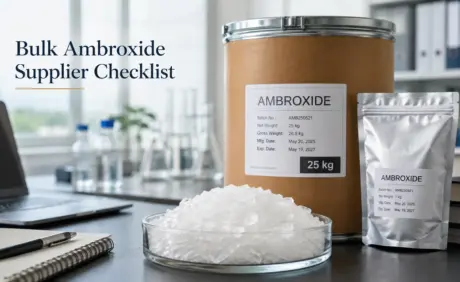
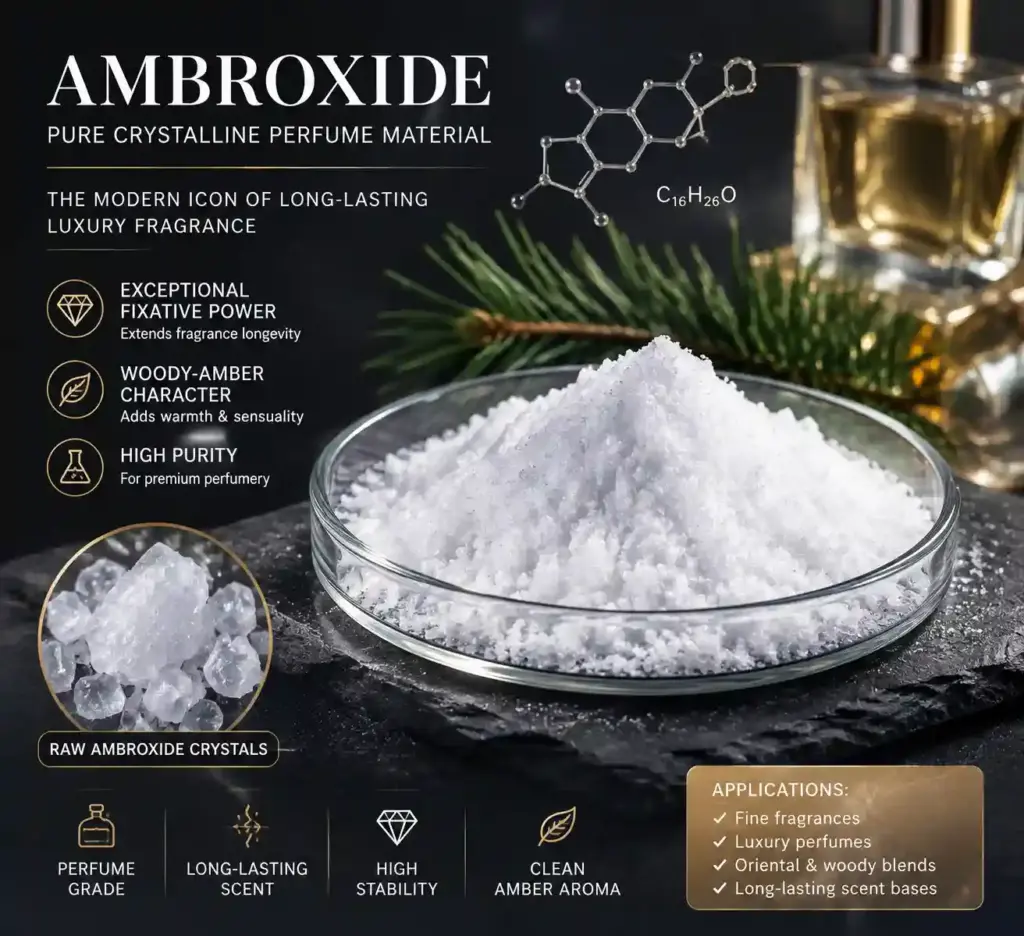
For technical purchasing, the BWX product record uses the names Ambroxide and Ambroxane. The entry gives CAS 6790-58-5, formula C16H28O, and molecular weight 236.393. Use the Ambroxide product specification when you need to match a name to a documented raw material.
Ambroxan Perfume vs Pure Ambroxan Material
A perfume is a consumer product made from fragrance materials, a carrier, and other formula components. A raw material is assessed separately for identity, physical form, solubility, odor, and batch documentation.
BWX lists Ambroxide as a white crystal with a melting point of 74-77 degrees C and solubility in ethanol and other organic solvents. These are raw-material reference fields.
What Does Ambroxan Smell Like?
The BWX description gives Ambroxide/Ambroxane a dry ambergris odor with pine- and cypress-like woody notes, plus green and tea nuances. That wording is the specific odor reference in the approved BWX product source.
| Odor Facet | BWX Reference | Evaluation Boundary |
| Dry ambergris | Central odor direction | Applies to the raw-material reference |
| Pine and cypress | Woody nuances | Intensity depends on the complete formula |
| Green and tea | Supporting nuances | Compare under consistent test conditions |
Dry Ambergris Character
Dry ambergris is the central direction in the raw-material description. A finished perfume carries the balance created by its complete formula.
Pine and Cypress-Like Woody Notes
Pine and cypress add a coniferous wood impression. Other materials shape their intensity in a finished fragrance.
Smell Description vs Finished Perfume Impression
Green and tea are supporting facets. Record product identity and test conditions when comparing the raw material with a finished perfume.
Is Ambroxan the Same as Ambroxide or Ambroxane?
The names overlap in online perfume language, but a purchase or quality record needs a single, traceable identity.
Ambroxide and Ambroxane in the BWX Product Record
BWX lists Ambroxide and Ambroxane together in the product record for CAS 6790-58-5. The same entry gives formula C16H28O, molecular weight 236.393, purity of at least 99.0%, white crystal appearance, and a 74-77 degrees C melting point.
Match the product name and CAS number across the quotation, sample label, certificate of analysis, and technical data sheet.
Why CAS Numbers Matter
A CAS number is a chemical registry identifier used in technical and commercial records. For Ambroxide/Ambroxane, the BWX reference uses CAS 6790-58-5. Keep the number with the lot reference and specification version during sample approval.
Keep Cetalox and Super Ambroxide Separate
Cetalox/Super Ambroxide appears as a separate BWX product with CAS 3738-00-9. Keep it separate from Ambroxide/Ambroxane in the item master, quotation, sample file, and purchase order.
What Does Ambroxan Do in Perfume?
Search results place Ambroxan in ambergris, woody, and base-note discussions. Those terms provide industry context; performance depends on the complete formula.
Base-Note Context
In a finished perfume, an Ambroxan-style material can be discussed as part of the later fragrance profile. The actual role depends on the full composition and use level. Keep a raw-material description separate from a finished-product claim.
Fixative Claims and Evidence Boundaries
Formula balance is the practical issue. Other materials can shift the ambergris, woody, green, or tea facets. Evaluate the ingredient in dilution and again in the target perfume base. Fixative is an industry term for a material used to support persistence or structure. The BWX Ambroxide entry provides no quantified fixation result, test method, or performance comparison, so a measured performance claim needs test data.
How Should You Read Ambroxan Fragrantica Pages?
The `ambroxan fragrantica` query usually leads to an Ambroxan note page, individual perfume pages, or community discussions. Use these pages to find fragrances associated with the note.
Fragrantica Note Pages
Fragrantica note pages organize perfumes that the database associates with Ambroxan. They are useful for discovering product names and comparing how a finished perfume is presented. They are not raw-material specification sheets.
Read the Full Fragrance Page
User comments describe personal impressions of finished perfumes. Terms such as salty, musky, marine, or skin-like remain user descriptions. Use supplier documents for identity, purity, physical form, and handling. Read the full perfume page because the complete formula determines the finished scent.
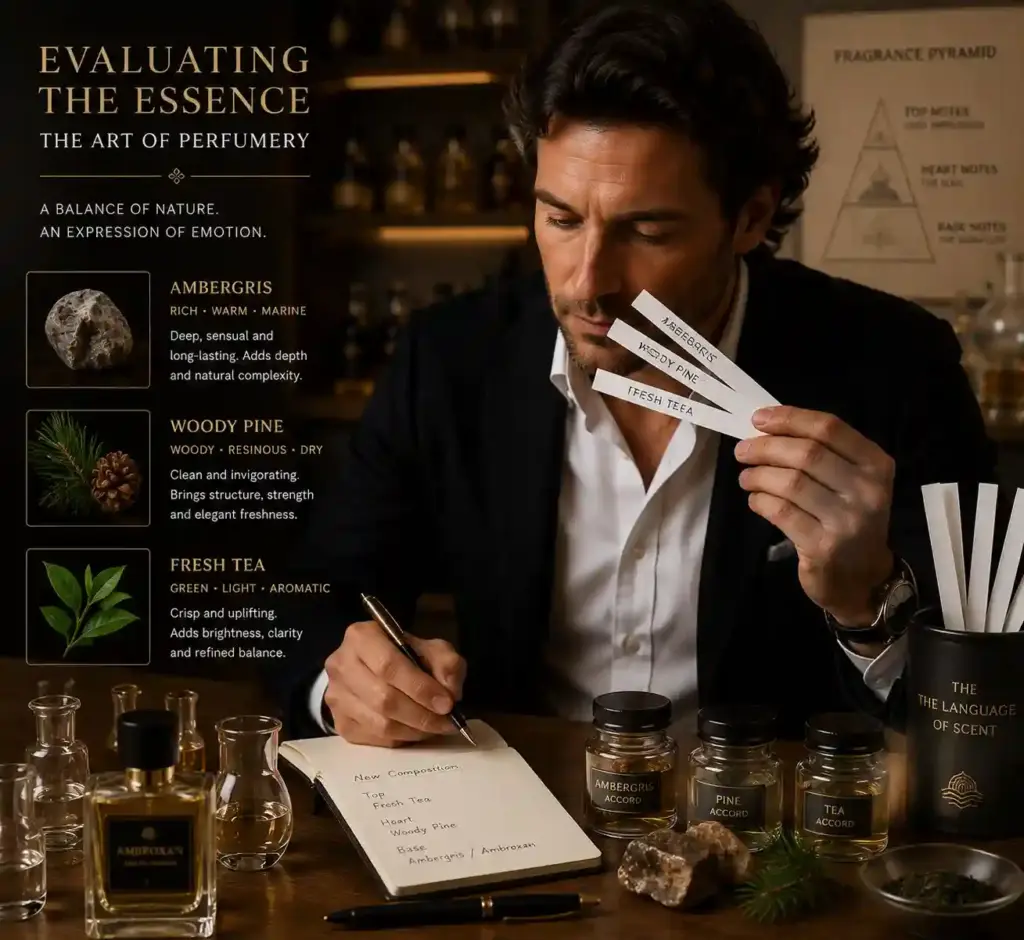
How Can You Evaluate an Ambroxan Perfume?
Use a repeatable method to compare a perfume, dilution, or raw material.
Check the Product Identity
Write down the product name, CAS number, source, lot information, and document version. The BWX reference is Ambroxide/Ambroxane, CAS 6790-58-5. Keep Cetalox/Super Ambroxide, CAS 3738-00-9, in a separate record.
Smell at Fixed Time Points
Use the same concentration, blotter type, room conditions, and evaluation schedule for each sample. Record dry ambergris first, then the pine-like, cypress-like, green, and tea facets. Add clarity or sediment notes for a material solution.
Compare the Ingredient and the Finished Formula
Treat the raw material, the dilution, and the finished formula as separate stages. Record which observations belong to the ingredient and which belong to the wider composition.
Why Do Ambroxan Perfumes Smell Different?
Products carrying an Ambroxan label can present different overall odors.
Concentration and Dilution
Concentration changes perceived intensity and the balance between odor facets. A consistent test method gives each comparison the same basis. Record the concentration for every evaluation.
Formula Composition
The surrounding formula contributes to the final result. Woody, amber, green, tea, musk, citrus, or floral materials can each change the finished perfume. These are formula-level considerations for an Ambroxan-labeled product.
Brand pages, note databases, and technical suppliers use different naming systems. For identity, check the CAS number, specification, batch record, and current supplier documents.
Conclusion: How to Understand an Ambroxan Perfume
An Ambroxan perfume is a finished fragrance that emphasizes an Ambroxan-style ambergris and woody direction. Its full odor comes from the complete formula. For the underlying material, the BWX reference for Ambroxide/Ambroxane uses CAS 6790-58-5 and describes dry ambergris, pine- and cypress-like woody notes, plus green and tea nuances.
Fragrantica can help you discover finished perfumes associated with an Ambroxan note. It cannot replace a raw-material specification or batch document. When you need to evaluate a sample, keep the name, CAS number, test method, and batch information together. BWX supplies synthetic fragrance ingredients and supports technical and compliance-document discussions; a specification or sample request can be sent through BWX contact support.
FAQ
Q1: What is an Ambroxan perfume?
A: An Ambroxan perfume is a finished fragrance with an Ambroxan-style ambergris and woody direction. Its smell comes from the full formula. The undiluted aroma chemical has its own specification and batch record.
Q2: What does Ambroxan smell like?
A: BWX describes Ambroxide/Ambroxane as dry ambergris with pine- and cypress-like woody notes, plus green and tea nuances. This description comes from the BWX raw-material product record. The full formula can change the balance in a finished perfume.
Q3: Is Ambroxan the same as Ambroxide or Ambroxane?
A: BWX lists Ambroxide and Ambroxane together for CAS 6790-58-5. The current product record uses those names. For an Ambroxan quotation or sample, match the commercial name to the CAS number, current specification, and lot documents before approval.
Q4: What does Ambroxan do in perfume?
A: Ambroxan appears in ambergris, woody, and base-note contexts. A fixative is a perfumery material used to support fragrance structure or persistence. The BWX Ambroxide record provides no quantified fixation result or test method. Confirm this point with target-formula test data.
Q5: Can Fragrantica confirm the identity of an Ambroxan ingredient?
A: Fragrantica identifies finished perfumes associated with an Ambroxan note. A raw material requires a product name, CAS number, specification, lot information, and current supplier documents. BWX lists Ambroxide/Ambroxane under CAS 6790-58-5.