When you source bulk Ambroxide, build the approval around traceable product identity and current supplier evidence.
Start with traceability.
A complete review covers specifications, batch documents, a representative sample, packaging, storage, and destination-market documentation.
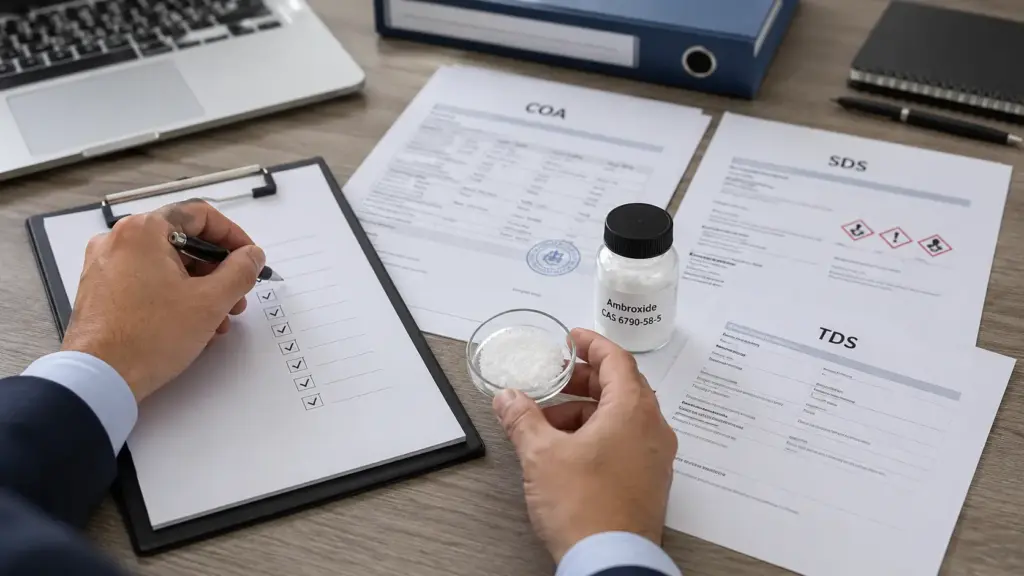
What Should a Reliable Bulk Ambroxide Supplier Prove?
A supplier should identify the material as Ambroxide or Ambroxane with CAS 6790-58-5. The specification set should use the same identity. The supplier should document how the approved sample relates to commercial production. Storage, packaging, and destination-market information complete the approval file.
1. Verify Ambroxide Identity Before Comparing Quotes
Supplier pages use several names for amber-woody fragrance materials. The synthetic fragrance ingredients category provides context. The purchase record still needs fields that purchasing, quality, and receiving teams can check on every document.
Match the Product Name, CAS Number, and Synonyms
BWX lists the product as Ambroxide and Ambroxane with CAS 6790-58-5. Its formula is C16H28O, and its molecular weight is 236.393. Those fields should agree across the commercial and quality records. Ask each supplier to show the product name, CAS number, formula, and lot number on the quotation, sample label, COA, SDS, and shipping documents.
Separate Ambroxide From Cetalox and Super Ambroxide
Ambroxide and Cetalox/Super Ambroxide are separate products in the BWX specification set. Ambroxide uses CAS 6790-58-5, while Cetalox/Super Ambroxide uses CAS 3738-00-9. Keep these lines separate in your approved-vendor list, ERP item master, purchase order, and incoming inspection plan.
2. Review the Ambroxide Specification Sheet
The specification sheet gives your laboratory and quality team measurable fields for incoming control. Review the Ambroxide product specification as a starting point. The supplier document should remain the release reference.
| Field | Ambroxide Reference |
| CAS number | 6790-58-5 |
| Formula | C16H28O |
| Molecular weight | 236.393 |
| Purity | ≥99.0% |
| Melting point | 74–77°C |
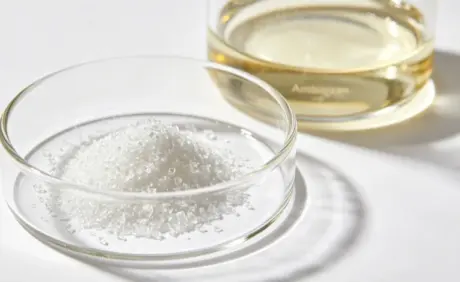
| Appearance | White crystal |
| Solubility | Soluble in ethanol and other organic solvents |
| Packaging reference | 1 kg bag; 25 kg drum |
Check Purity, Melting Point, Appearance, and Solubility
Purity sets the initial acceptance limit. Melting point and appearance support the incoming review. Solubility information guides bench testing in ethanol and other organic solvents. These values define product-reference fields. Ask for the latest batch results before approving a shipment.
Request Current COA, SDS, and TDS Versions
Request a Certificate of Analysis, Safety Data Sheet, and Technical Data Sheet with revision dates and product identifiers. The COA should identify the batch and list the test results used for release. The SDS should match the supplied material and destination-market format. The TDS should explain the commercial specification and handling information used by your formulation and quality teams.
3. Test Samples Before Placing a Bulk Order
Sample work converts a supplier claim into a formulation decision. Define your test plan before requesting a quote so every candidate is reviewed against the same brief.
Compare Odor Profile and Formulation Behavior
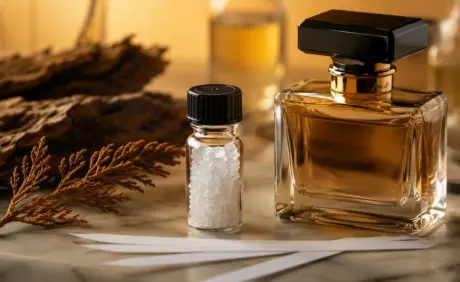
BWX describes Ambroxide as a dry ambergris odor with pine- and cypress-like woody notes plus green and tea nuances. Test the sample in the intended fragrance base. Keep the concentration and evaluation times fixed. Then record its dry-down, diffusion, clarity, and effect on the complete formula.
Test Solubility, Clarity, and Thermal Handling
Prepare a small solution at the concentration used in your formulation work. Record the dissolution time first. Check clarity and sediment after cooling and warming. The listed 74–77°C melting range and crystal form make temperature handling relevant. Your test record should cover weighing, dissolution, storage, and transfer conditions.
Link the Sample to the Intended Production Batch
Ask for the sample lot number and production date. Review the retention-sample policy as a separate control. Your raw-material file should state the approved odor description, test concentration, acceptance limits, and approval date. It should also record the supplier’s process for confirming commercial-batch comparability.
4. Audit Manufacturing and Quality-Control Evidence
Your supplier review should describe evidence that purchasing, quality, and regulatory staff can check. Public capability statements provide context; current documents support release.
Ask How Batch Release Is Documented
Ask which tests are performed for each batch, who reviews the results, and how deviations are handled. Confirm whether the COA reports actual results or a general specification range.
Confirm Production, Pilot, and Technical-Support Scope
BWX’s company context describes lab-scale R&D, pilot testing, industrial production, technical support, and compliance-document support. Ask the supplier to map these capabilities to your project: sample preparation, formulation discussion, pilot quantity, bulk packaging, and repeat-order planning.
Review Certificates and Market Documents for Your Destination
List the certificates, safety documents, regulatory statements, and import records required by your quality team and destination market. Request current copies. Confirm the legal entity, manufacturing site, covered product or activity, issue date, validity period, and intended market. Any open item becomes a pre-order approval condition.
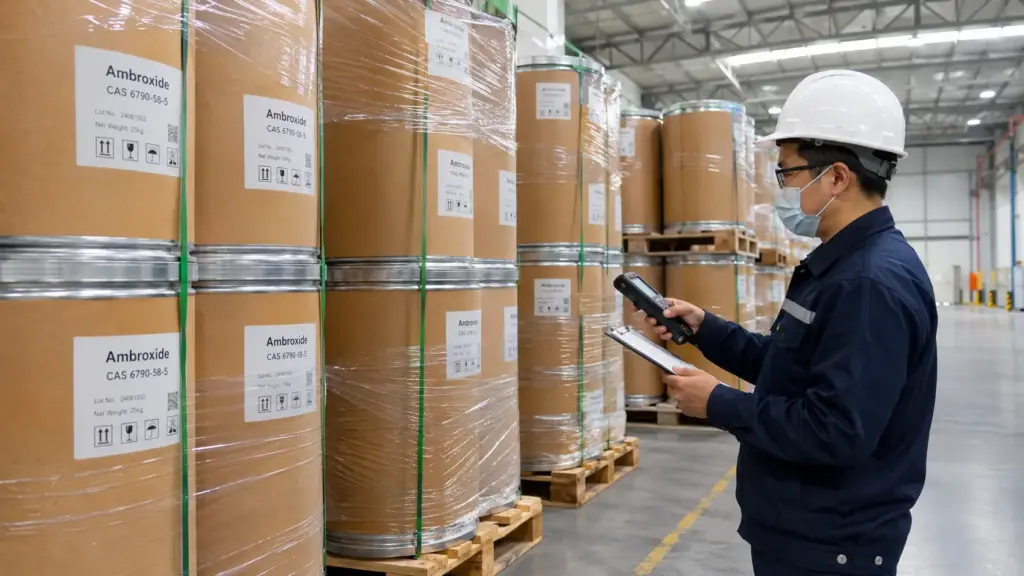
5. Check Packaging, Storage, and Supply Continuity
Packaging and storage affect receiving, warehousing, sampling, and production planning. Confirm the delivery details before comparing landed cost.
Match Packaging to Your Trial and Production Volumes
The BWX specification reference lists 1 kg bags and 25 kg drums. Ask for current package dimensions, inner-liner material, net weight tolerance, label fields, lot marking, and pallet configuration.
Confirm Storage and Transport Conditions
The product reference calls for a sealed, dry, room-temperature location protected from direct sunlight and kept away from fire and oxidizing agents. Ask for route-specific transport instructions, temperature limits, seal requirements, and warehouse guidance.
Ask for MOQ, Lead Time, and Reorder Planning
Request the current MOQ and available pack sizes. Add production lead time, sample lead time, stock status, payment terms, quotation validity, and reorder planning. These fields change by destination, batch, and order volume. The written offer should confirm each one.
6. Use a Supplier-Comparison Checklist Before Approval
Put each candidate through the same evidence review so quality, regulatory, and purchasing teams share one approval record.
| Checkpoint | Evidence to Request | Approval Question |
| Identity | Product name, CAS, synonym, lot number | Do all documents identify CAS 6790-58-5? |
| Quality | Current COA, SDS, TDS | Are limits, results, revisions, and test methods clear? |
| Sample | Sample lot and test record | Does the sample meet the odor and solubility brief? |
| Packaging | Label, pack size, liner, lot mark | Can receiving trace every container? |
| Supply | MOQ, lead time, reorder plan | Does the written offer fit the forecast? |
| Compliance | Destination-market documents | Are certificates and statements current and applicable? |
| Support | Technical contact and escalation path | Can the supplier support pilot and repeat-order questions? |
Use the checklist in your Ambroxide request for quotation.
Each supplier should answer the same fields and attach the same document set. Assign an owner and due date to every open item. Approval can proceed when the evidence matches the purchasing brief.
About BWX
BWX, formally Henan Boweixin Biotechnology Co., Ltd., supplies raw materials for fragrance, cosmetics, nutraceutical, pharmaceutical, and daily-chemical applications. Its documented scope covers R&D, pilot testing, industrial production, technical support, international supply, and compliance-document support.
The BWX Ambroxide reference identifies CAS 6790-58-5, ≥99.0% purity, a 74–77°C melting point, white crystal appearance, ethanol and organic-solvent solubility, and 1 kg bag or 25 kg drum packaging references. For a sourcing review, submit the target quantity, application, destination, required documents, sample request, and planned order timing through BWX contact support.
FAQ
Q1: What is the CAS number for Ambroxide?
A: The BWX Ambroxide specification lists CAS 6790-58-5. Keep that number with the product name, lot number, COA, SDS, and purchase-order line.
Q2: Is Ambroxide the same as Cetalox or Super Ambroxide?
A: The BWX specification set treats them as separate products. Ambroxide is CAS 6790-58-5, while Cetalox/Super Ambroxide is CAS 3738-00-9, so your item records and quotations should keep them separate.
Q3: What documents should you request from an Ambroxide supplier?
A: Request a current COA, SDS, TDS, product label, lot information, packaging details, and applicable destination-market certificates. Check revision dates, product identity, manufacturing site, and batch references before approval.
Q4: Should you test an Ambroxide sample before a bulk order?
A: Yes. Test odor, dissolution, clarity, thermal handling, and dry-down behavior in the intended fragrance base. Record the sample lot and acceptance criteria so the bulk order follows an approved formulation result.
Q5: What packaging options should bulk buyers confirm?
A: Confirm the current pack size, inner liner, net weight, label fields, lot marking, pallet configuration, and storage instructions. BWX’s reference lists 1 kg bags and 25 kg drums; request the current commercial packaging before issuing a purchase order.