Introduction: What Makes Ambroxide Special?
In modern perfumery, some ingredients are not designed to dominate a fragrance but to create depth, smoothness, and lasting character. Ambroxide is one of these important fragrance molecules.
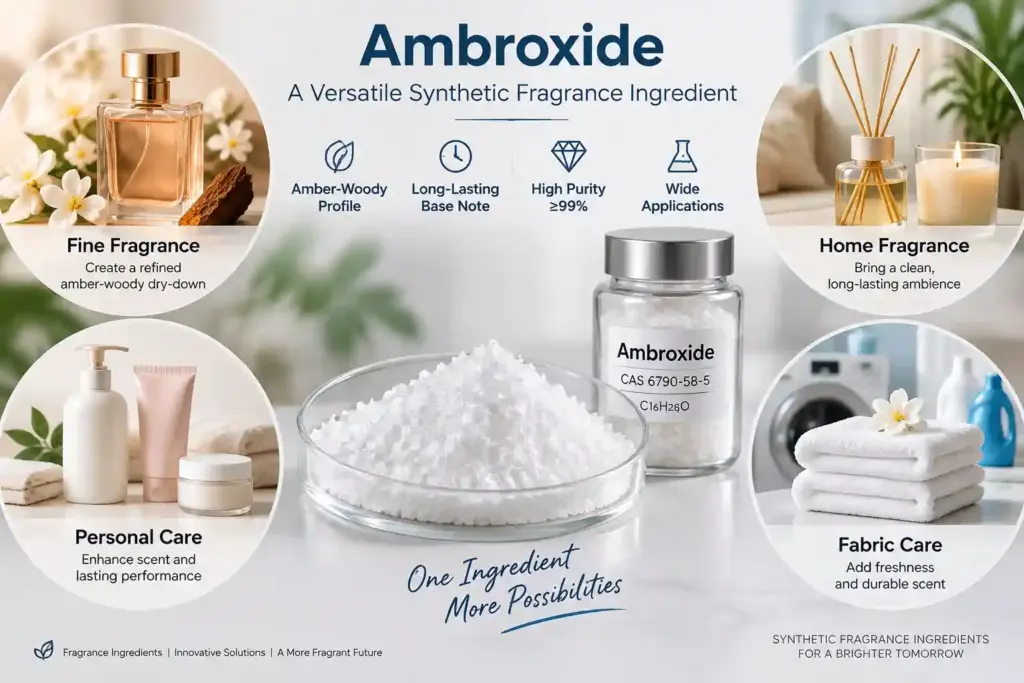
Known for its warm amber, woody, and clean musky profile, Ambroxide has become a popular ingredient in many contemporary perfumes. It helps create a sophisticated scent impression while improving fragrance longevity.
What Does Ambroxide Smell Like?
Ambroxide has a unique scent profile that is often described as:
- Warm amber
- Dry woody notes
- Soft musk
- Clean skin-like aroma
- Slight salty marine nuances
Unlike sweet or heavily floral ingredients, Ambroxide creates a subtle and elegant background. Its aroma is smooth, modern, and often associated with luxury fragrances.
Many people describe it as the smell of warm skin, sun-dried wood, and a soft ocean breeze combined together.
The Main Characteristics of Ambroxide Aroma
1. Amber Warmth
The most recognizable feature of Ambroxide is its amber-like character.
It provides a warm, resinous feeling that adds richness and sophistication to perfume compositions.
2. Woody Dryness
Ambroxide also brings a dry woody impression similar to cedar or sandalwood.
This makes fragrances feel cleaner, more refined, and less sweet.
3. Clean Musk Effect
Another important feature is its soft musky quality.
It can create a smooth “second skin” effect, making a fragrance feel natural and comfortable.
4. Long-Lasting Base Note
Ambroxide is widely valued because it works well as a fragrance base ingredient.
It helps other perfume notes blend together while extending the overall scent experience.
Is Ambroxide the Same as Ambroxan, Ambroxane, or Ambergris?
Names overlap in this ingredient family.
Check the product name and CAS number together before comparing odor descriptions or supplier quotations.
Ambroxide, Ambroxane, and Ambroxan
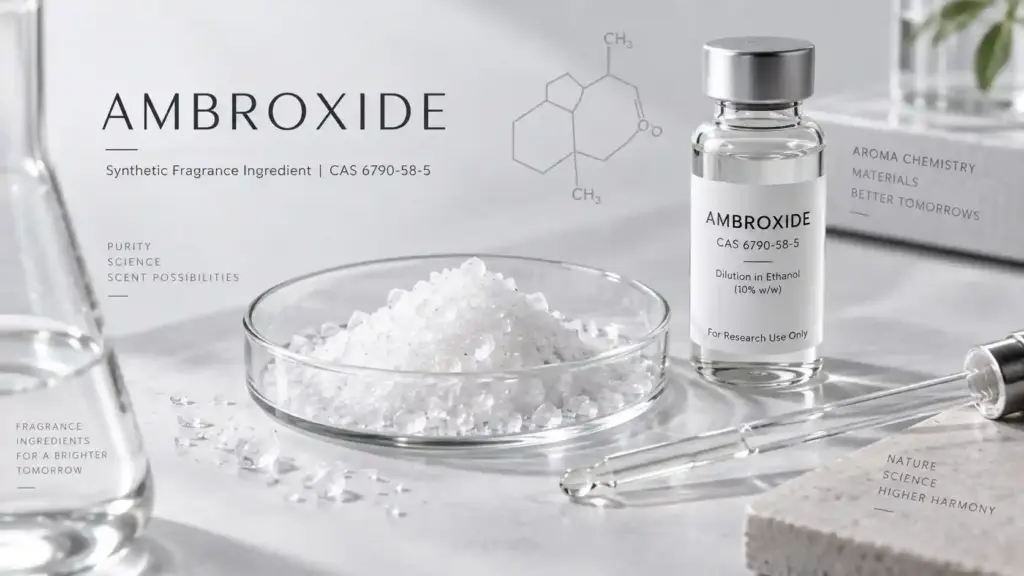
BWX lists the product as Ambroxide and Ambroxane with CAS 6790-58-5. Perfume discussions also use Ambroxan for ambergris-type materials. Commercial terminology can vary. Purchasing and quality teams should match the product name, synonym, CAS number, and lot number across every document.
Ambroxide vs Ambergris
BWX lists Ambroxide as a synthetic fragrance ingredient and uses “dry ambergris odor” in its sensory description. For product identity, use the ingredient name, CAS number, specification, and batch documents.
Ambroxide vs Cetalox and Super Ambroxide
Keep Ambroxide separate from Cetalox and Super Ambroxide in purchasing records. BWX identifies Ambroxide as CAS 6790-58-5. Cetalox/Super Ambroxide is listed as CAS 3738-00-9. The CAS difference should appear in the approved-vendor list, ERP item master, and sample file. It should also remain visible on the purchase order.
Ambroxide Behavior in a Fragrance Formula
Evaluate Ambroxide on a blotter, in dilution, and inside the target fragrance base.
Keep one method for the comparison.
Base-Note Character and Dry-Down
Timed blotter checks show how the odor develops after application. Record the first impression. Return at the intervals set in the test method and assess dry ambergris, pine, cypress, green, and tea facets. Repeat that method in the complete formula.
Solubility and Handling
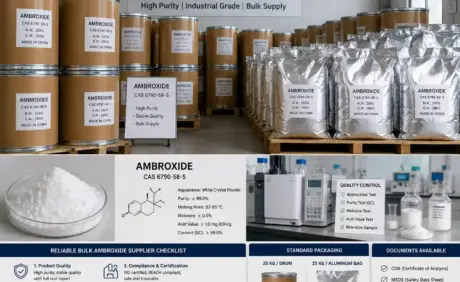
BWX lists Ambroxide as a white crystal. It is soluble in ethanol and other organic solvents. The product reference gives a melting point of 74-77 degrees C and purity of >=99.0%. Temperature affects weighing, dissolution, warming, cooling, storage, and transfer. Record preparation conditions with the sensory result.
Keep the Evaluation Conditions Consistent
Use the same dilution and blotter schedule for each sample. Keep the solvent, product base, and room conditions consistent. Record the evaluator’s notes at the same time points. The samples then share one testing basis.
Ambroxide Smell Profile at a Glance
Use the table as a working sensory checklist.
| Scent Facet | What It Means in Practice | How to Evaluate It |
| Dry ambergris | Main dry odor character | Smell at the time points set in the test method |
| Pine-like wood | Dry coniferous facet | Record its strength in dilution and in the target base |
| Cypress-like wood | Dry woody facet | Compare it at the same concentration and time points |
| Green | Green nuance around the woody profile | Check its balance during the opening and dry-down |
| Tea-like | Tea nuance in the complete profile | Compare the blotter with the finished-product base |
Why Is Ambroxide Used in Perfumes?
Perfumers use Ambroxide for several reasons:
Enhancing Longevity
Ambroxide has excellent staying power and can help fragrances remain noticeable for longer periods.
Adding Depth
Fresh citrus, floral, and aromatic notes can feel more complete when combined with an amber woody base.
Creating Modern Fragrance Styles
Many contemporary perfumes use Ambroxide to achieve a clean, minimalist, and sophisticated scent profile.
Ambroxide vs Traditional Amber Notes
Although the names are related, Ambroxide and traditional amber accords are not exactly the same.
Traditional amber fragrance accords are usually created by combining multiple ingredients such as resins, vanilla, woods, and sweet notes.
Ambroxide is a specific aroma molecule that provides an ambergris-inspired woody character.
What Fragrance Families Pair Well With Ambroxide?
Ambroxide works well with many fragrance styles, including:
Woody Fragrances
Enhances cedar, sandalwood, and dry wood accords.
Fresh Fragrances
Adds warmth and prevents fresh notes from disappearing too quickly.
Musk Fragrances
Creates a clean, skin-like scent effect.
Floral Fragrances
Provides balance and a smoother dry-down.
Is Ambroxide Suitable for Everyday Fragrances?
Yes. Because Ambroxide is smooth and versatile, it is often used in everyday fragrances designed to feel clean, elegant, and easy to wear.
It is especially popular in modern minimalist perfumes where the goal is not a strong single note but a refined overall impression.
Frequently Asked Questions
What does Ambroxide smell similar to?
Ambroxide is often compared to warm amber, dry woods, clean musk, and a soft salty marine scent.
Is Ambroxide natural or synthetic?
Modern Ambroxide used in perfumery is generally produced through chemical synthesis, although it was originally inspired by compounds found in ambergris.
Does Ambroxide make perfume last longer?
Yes. It is commonly used as a base ingredient because of its ability to support fragrance persistence.
Is Ambroxide the same as amber?
No. Ambroxide creates an ambergris-like aroma, while amber accords in perfumery are usually blends of multiple ingredients.
Why do luxury perfumes use Ambroxide?
Because it adds warmth, smoothness, and a sophisticated long-lasting character without overpowering other notes.