Picture a customer spraying a new summer eau de parfum on her neck before spending the afternoon outside. The scent works. The safety review still has to ask what happens when ingredients left on her skin meet sunlight. A poor answer can delay the launch or force a reformulation. BWX works with fragrance developers sourcing high-purity synthetic aroma materials and supporting product documents. The review starts with the formula, dose, application area, and expected use.
What Phototoxicity Means in Fragrance Development
Phototoxicity describes an adverse skin reaction that needs both a chemical exposure and light. Product developers need to know which type of reaction they are assessing before they ask a supplier for data.
Photoirritation Is Not the Same as Photoallergy
Photoirritation may look like an unusually severe sunburn when enough reactive material remains on the skin during UV exposure. Photoallergy involves the immune system and can resemble allergic contact dermatitis. RIFM notes that a fragrance material must absorb relevant UV wavelengths before it can have phototoxic potential. Most fragrance ingredients do not meet that condition.
A reviewer can narrow the question quickly by checking four items.
- Confirm the exact raw material identity, CAS number, extraction method, and composition.
- Check UV/visible absorption data, safety assessments, SDS information, and the applicable IFRA Standards.
- Calculate concentration in the finished product—not only in the fragrance concentrate.
- Record where the product is applied, how often it is used, and how much sunlight the area is likely to receive.

Why Summer Perfume Risk Depends on the Finished Application
A concentrate used at 20% in an eau de parfum creates a different exposure from the same concentrate used at a low level in a body wash. Product format changes the calculation.
Five Variables Procurement and R&D Teams Should Document
The phrase sun-safe fragrance sounds reassuring, but it gives a supplier very little to work with. A useful brief records the following details.
- Product format: leave-on hydroalcoholic spray, body oil, cream, hair mist, rinse-off product, or home fragrance.
- Exposure site, such as the neck, wrists, face, hair, covered skin, or a non-skin surface.
- Fragrance dosage: the percentage of concentrate in the final formula and each restricted ingredient’s contribution.
- Sunlight scenario: routine indoor use, incidental daylight, beach use, or prolonged direct exposure.
- Sales market, including local cosmetic rules, labeling duties, and the IFRA guidance used for the assessment.
When a perfume contains several natural materials with furocoumarins, the assessor adds their proportional contributions under the applicable IFRA approach. Expressed bergamot and cold-pressed lemon cannot be reviewed as unrelated entries.
Build Freshness Without Treating Citrus Character as Citrus Exposure
Perfumers often receive a summer brief filled with words such as bright, airy, clean, and fresh. Citrus is one way to get there. It is not the only way.
Use Synthetic Aroma Materials as Olfactory Building Blocks
Synthetic fragrance ingredients still need a safety review. A defined identity and batch specification make the sourcing discussion more precise, especially when natural extracts may vary with origin or processing.
BWX Watermelon Ketone, also known as Calone, CAS 28940-11-6, has a marine and ozonic odor with watery, green, and watermelon facets. It can suggest sea air and open space without making citrus oil the center of the accord. Explore Watermelon Ketone specifications.
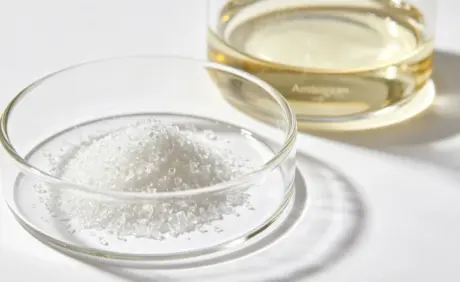
For the drydown, BWX Ambroxide, CAS 6790-58-5, brings a dry ambergris and woody character with diffusion and tenacity. BWX Cetalox, CAS 3738-00-9, adds an elegant woody-ambergris effect. Its BWX specification lists solubility in ethanol, DPG, or DEP under the stated conditions. Both can support the scent after volatile notes fade. Review Ambroxide and Cetalox for formulation planning.
A B2B Sun-Safety Workflow Before Commercial Launch
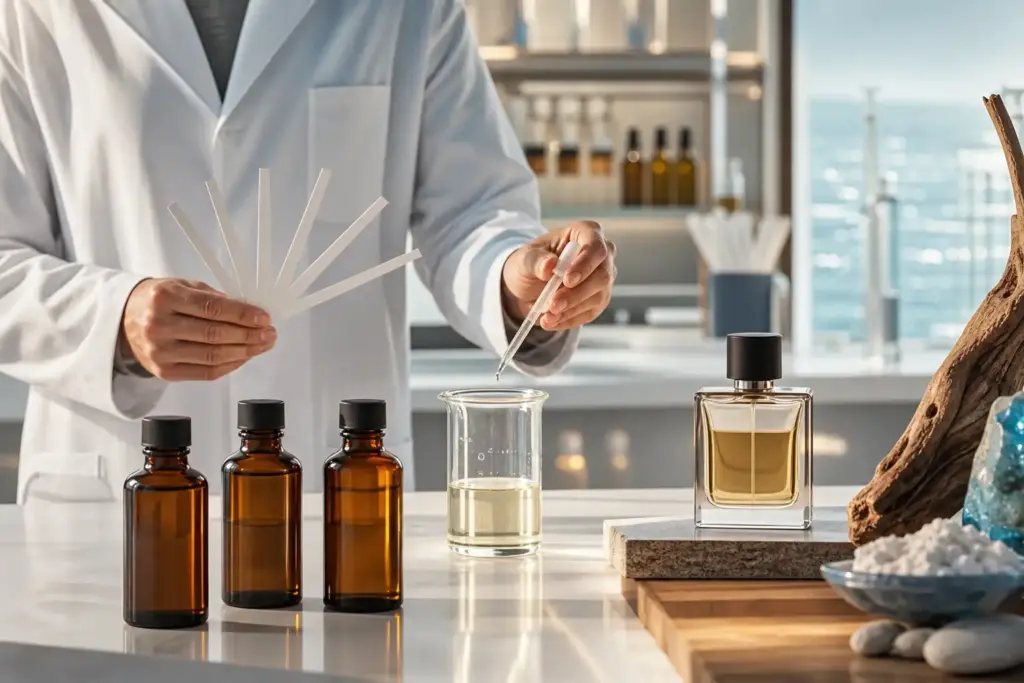
Review photosafety while the formula can still be changed. Waiting until packaging copy is approved creates rework for R&D, purchasing, and regulatory teams.
From Raw-Material Qualification to Finished-Product Review
A practical review moves in this order.
- Create a complete fragrance bill of materials with CAS numbers, supplier names, batch references, and use levels.
- Request current SDS, COA, specification, allergen information, and relevant IFRA conformity information for the intended application.
- Identify natural complex substances and restricted constituents, including contributions from other sources.
- Recalculate limits at the finished-product level whenever the fragrance dosage or raw-material supplier changes.
- Complete the cosmetic safety assessment required in the destination market, along with suitable stability, compatibility, packaging, and use testing.
One paperwork detail causes repeated confusion. A fragrance supplier issues the IFRA Certificate of Conformity for a fragrance mixture and a stated use. IFRA does not issue that certificate, and the document does not replace the finished product safety assessment. If a quotation says IFRA approved but gives no product category, amendment basis, or calculation scope, the buyer should ask for a clearer answer before approving the material.
How BWX Supports Summer Fragrance Projects
BWX supplies synthetic fragrance materials for fine fragrance, personal care, fabric care, and related uses. The first conversation is usually about the formula itself. What odor direction is needed? Which solvent system is being used? What documents must the regulatory team review?
Technical Conversations That Reduce Rework
For a new summer perfume, send BWX the finished format, target dosage, solvent system, odor brief, sales market, and document list. That gives the technical team enough context to discuss product specifications, packaging, samples, and available documentation. The brand and its appointed safety professionals still make the final decision on regulatory clearance and finished-product safety.
Developing a marine, clean-woody, or amber summer fragrance? Contact BWX for a specification-led discussion and request the documentation needed for your formulation review. Start a technical consultation.
FAQ
Development and purchasing teams tend to raise the same questions when a summer launch reaches safety review.
Q: Are all citrus oils phototoxic?
A: No. Check the exact oil, how it was produced, its furocoumarin content, the finished dose, product category, and sunlight exposure.
Q: Does an IFRA certificate replace a cosmetic safety assessment?
A: No. It covers a specified fragrance mixture and use. The finished cosmetic still needs its own safety assessment.
Q: Should rinse-off and leave-on products use the same phototoxicity limits?
A: Not automatically. Exposure and applicable product categories differ, so the intended application must be assessed.
Q: Can synthetic aroma chemicals be assumed to be sun-safe?
A: No. Defined synthetic materials still require identity, exposure, safety, and regulatory review.
Q: What should buyers request from a fragrance ingredient supplier?
A: Request specifications, COA, SDS, storage information, regulatory data, and application-relevant conformity documentation where available.