You can find Ambroxan in many places today. It is in perfumes, body lotions, and hair items. It is also used in laundry soaps and home room sprays. Makers use it because it gives their mixes a clean, long-lasting ambergris smell. It does this great job without needing any rare, hard-to-find natural stuff. Many folks like to call it a “modern musk.”
However, that name is a bit tricky. That label describes how the scent feels close to your skin. It does not really describe its true odor family. For a person buying or mixing it, other facts matter much more. The main question is if it brings the exact right odor. They also care a lot about its stability and solubility. Finally, they need to make sure every single batch acts the exact same way.
What Is Ambroxan and Why Is It Called a Modern Musk?
Ambroxan is a man-made scent part. It has a woody-amber smell and works as a fixative to hold smells together. The exact item we are looking at here is Ambroxide, CAS 6790-58-5. Some people also know it as Ambroxane. Its molecular formula is C16H28O. Also, its molecular weight is exactly 236.393.
A Clear Chemical and Sensory Identity
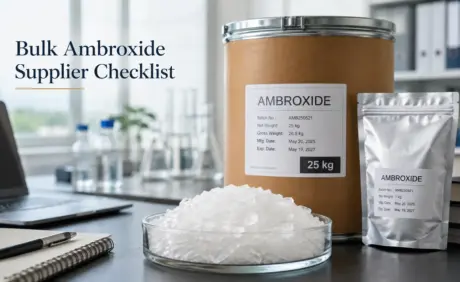
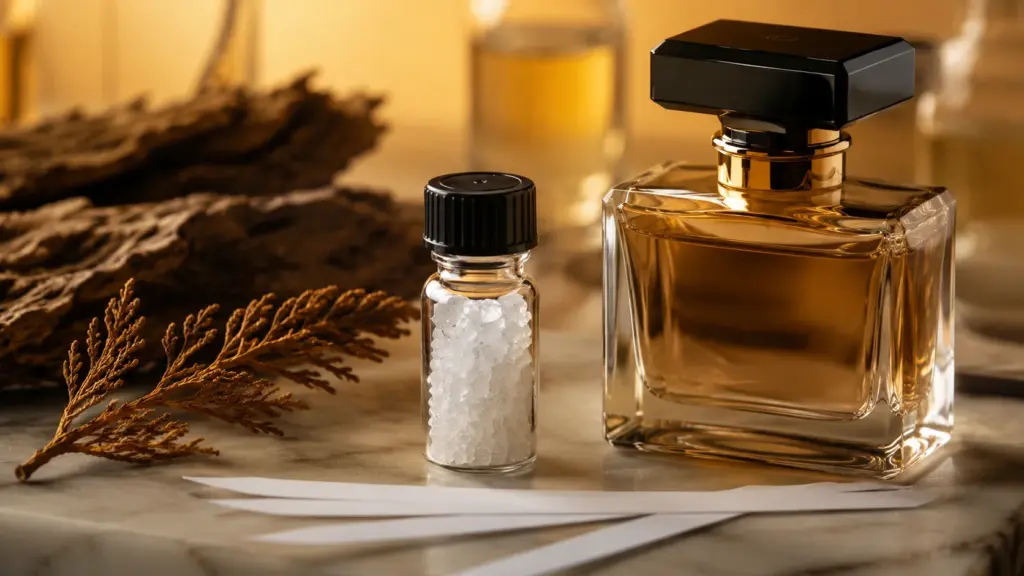
A normal, high-purity type shows up as little white crystals. It comes with a purity of at least 99.0%. Plus, it has a melting point of 74 to 77°C. It melts easily in ethanol. It also mixes well into other good organic solvents.
But, it does not mix into plain water at all. You can read the full Ambroxide raw material facts on your own. This is a very smart step to take while you prepare a supplier comparison.
The smell of it is very dry and warm. It smells very much like ambergris. You might also notice tiny hints of pine and cypress. Some fresh, green, tea-like smells hide quietly in the background. They sit right behind the main woody note.A soft skin effect can read as musky, especially in a simple perfume or clean personal-care base.
Still, Ambroxan is not a conventional musk molecule. “Modern amber material” is the more precise term.
What Does Ambroxan Smell Like?
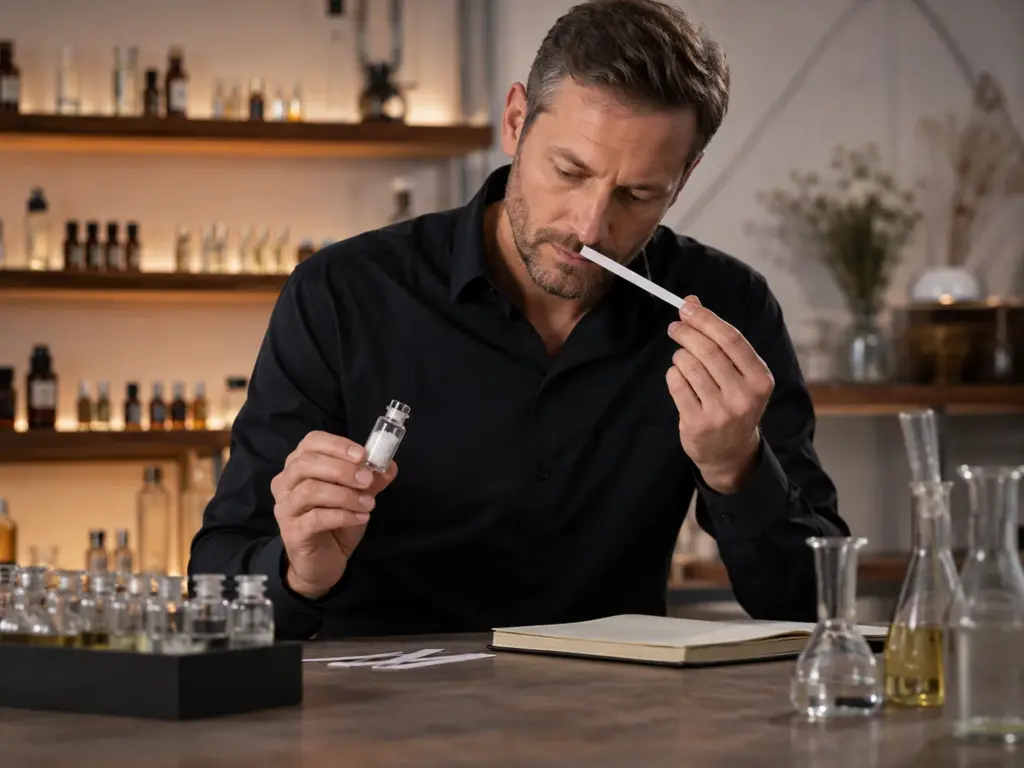
Ambroxan rarely behaves like a loud top note. It becomes clearer during the drydown, after brighter materials have faded. On a blotter, it may seem restrained at first, then develop a fuller dry wood, clean amber, and warm skin character.
Why the Odor Can Change by Base
In alcohol, Ambroxan can feel dry and airy. In cream or hair care, it may seem softer. On fabric, its woody character can remain after fresh notes disappear.
For technical work, use a practical description: a dry ambergris note with woody, green, tea-like, and lightly musky nuances. Test it in the actual product base, not only on paper. A blotter does not wash, heat, foam, or sit on hair.
Why Is Ambroxan Used So Widely?
Its value comes from function as much as scent. Low volatility helps it support the base after citrus, green, and light floral notes fade. It can add body and warmth without heavy sweetness.
Common Roles in Fragrance Formulation
In fine fragrance, Ambroxan creates a woody-amber backbone. In shampoo or body wash, it can leave a clean trace after rinsing. In fabric care, it supports a lasting drydown on fibers.
Perfumers use it to:
- Add diffusion and volume to woody, floral, musk, or marine accords
- Smooth the move from the heart into the base
- Reinforce long-lasting fragrance performance
- Create a clean, skin-like effect in minimalist formulas
- Reduce dependence on natural ambergris
This is why Ambroxan seems to be everywhere. You often notice the finished fragrance rather than the ingredient.
How Does Ambroxan Compare with Related Amber Materials?
“Amber chemical” is a broad commercial phrase. Materials in this group can smell woody and long lasting yet behave differently. Compare odor strength, melting behavior, intended role, and processing needs rather than choosing by name alone.
A Practical Three-Material Comparison
| Material | CAS No. | Typical Profile | Main Role | Key Technical Point |
| Ambroxan / Ambroxide | 6790-58-5 | Dry ambergris, pine-like wood, green and tea nuances | Base note and fixative | White crystals; ≥99.0%; 74–77°C melting point |
| Ambrocenide | 211299-54-6 | Strong ambergris and dry wood | High-impact diffusion and fixation | White to pale-yellow powder; ≥99.0%; 56–62°C |
| Sclareolide | 564-20-5 | Faint cedar, amber, earthy, and balsamic tone | Fixative and Ambroxan intermediate | White to off-white powder; about 124–127°C |
Ambrocenide is more forceful when you need a highly diffusive amber-woody effect. The high-impact amber-woody material should be evaluated as a separate formula choice, not a direct naming substitute.
Sclareolide is much quieter, but it has fixative value and serves as a key intermediate in Ambroxan production. That upstream link matters when you review supply continuity.
How Should You Test Ambroxan in a Real Formula?
A certificate shows whether a batch meets listed limits. It cannot tell you whether the drydown suits your product. A useful test checks both analytical data and sensory performance.
A Small but Useful Evaluation Routine
Confirm identity, purity, appearance, melting point, and loss on drying on the current COA. Test the sample in your own solvent or finished base. Check the opening, four-hour drydown, and next-day odor. For rinse-off products, evaluate after washing.
Watch for crystallization during cold storage. Poor dissolution or a rushed addition step can leave visible particles. Use heat only within the limits of your formula and solvent system. A careful small trial is better than a large first batch.
What Should You Check Before Buying Ambroxan?
Price per kilogram is only one part of cost. A cheaper batch becomes expensive when odor varies, documents arrive late, or crystals process poorly. You need stable quality, usable paperwork, suitable packing, and clear technical replies.
Buyer Checklist
Ask for a recent COA, current specification, CAS confirmation, test method, melting-point range, solubility guidance, sample availability, batch traceability, and lead time. Common packaging is 1 kg packs or 25 kg drums.
Store the material sealed and dry, away from sunlight, ignition sources, and oxidizers. When your project covers upstream ambergris chemistry, Sclareolide precursor details can help connect the raw-material chain.
A Supplier Perspective for Ambroxan Buyers
Henan Boweixin Biotechnology Co., Ltd. supplies fine chemical raw materials for fragrance, cosmetic, nutraceutical, and pharmaceutical applications. For an Ambroxan buyer, the relevant strengths are its Ambroxan-series portfolio, scale-up capability, full-process quality control, and export support. Its synthetic fragrance range lets you compare Ambroxide, Ambrocenide, Sclareolide, and Watermelon Ketone through one technical channel.
The company states that its products reach more than 30 countries and regions. Flexible production lines support pilot quantities and larger orders, while the listed quality systems include ISO 9001, HACCP, and ISO 22000. You can submit a technical sourcing request with the required grade, sample size, documents, packing, and delivery target.
FAQ
Q1: Is Ambroxan a musk?
A: Not in the strict chemical or perfumery sense. It is a woody-amber, ambergris-style aroma chemical. Its warm, skin-like drydown explains the “modern musk” nickname.
Q2: What is the CAS number for Ambroxan?
A: The Ambroxide grade covered here has CAS number 6790-58-5. Confirm the CAS, purity, and test method before ordering.
Q3: Is Ambroxan soluble in water?
A: It is generally not used as a water-soluble material. It dissolves in ethanol and suitable organic fragrance solvents. Test it in your exact base.
Q4: What is the difference between Ambroxan and Ambrocenide?
A: Ambroxan gives a smoother dry ambergris and woody effect. Ambrocenide is stronger and more diffusive. They are not direct one-for-one replacements.
Q5: How should Ambroxan be stored?
A: Keep it sealed and dry at room temperature, away from direct sunlight, ignition sources, and oxidizers. Follow the current safety data for the purchased batch.