A fragrance may open quickly in July and reach a faint dry-down within a few hours. Temperature, humidity, sweat, skin condition, application amount, and formula structure all affect that result. Low-volatility fixatives can support the base and change the evaporation profile, subject to the odor direction, solvent, product base, and target dosage.
Summer Conditions Change Fragrance Performance
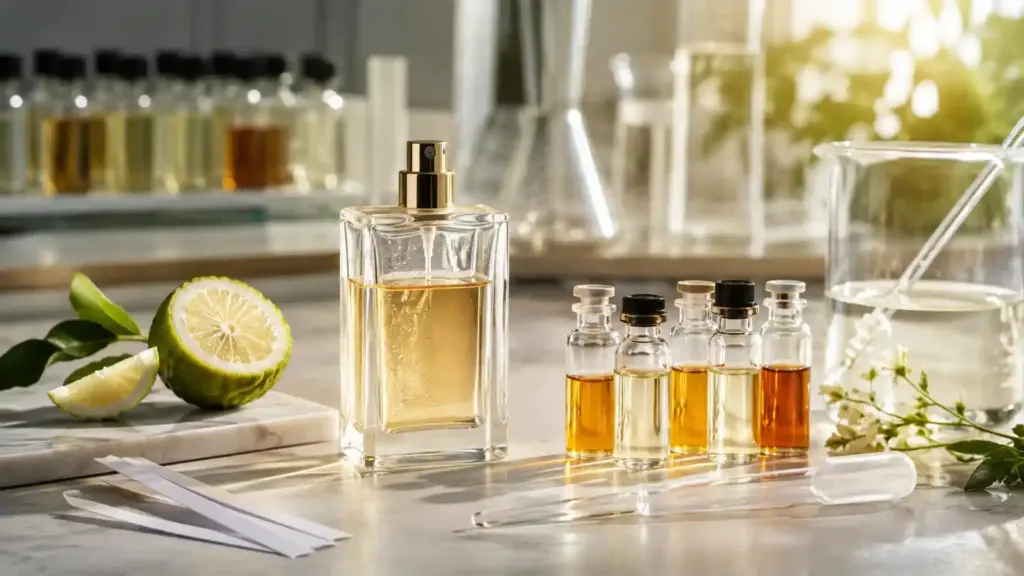
Warm-weather performance combines physical evaporation with sensory perception. Heat changes vapor pressure, while humid air and perspiration change projection on skin. Evaluation therefore needs separate scores for intensity, character, diffusion, and physical stability.
Heat Increases Volatility
Higher temperatures increase molecular movement and vapor pressure. Citrus, aromatic, green, and light floral materials may leave the skin or blotter quickly. A formula with limited low-volatility structure can lose its recognizable character before the intended dry-down develops.
Humidity Changes Projection
Warm, humid air can produce a broad opening close to the wearer. As the volatile top notes evaporate, a woody-amber base may become dense or indistinct. Summer evaluation should record odor quality alongside elapsed time because residual strength and fragrance balance describe different aspects of performance.
Skin and Application Affect Wear Time
Perspiration can move fragrance across the skin, while frequent washing and sun exposure can leave the application area dry. Application amount, location, moisturizer use, and skin temperature also change the result.
Formula performance still depends on the volatility curve, solubility, maturation, and dry-down structure. Controlled testing separates those variables from individual wear conditions.
The Role of Fragrance Fixatives
Fragrance fixatives are low-volatility materials that contribute structure during the heart and dry-down. Depending on the material, they may add amber, woody, musky, balsamic, mineral, or creamy notes.
Fixatives Shape the Evaporation Curve
A suitable fixative supports the release of volatile notes and helps connect the opening, heart, and base. The finished fragrance should retain its intended character at each evaluation point.
Dosage Determines the Result
A dosage series shows how the material affects diffusion, odor balance, clarity, and residue. Excess dosage may flatten the opening, dominate delicate notes, cloud the liquid, or form crystals during cooling and storage.
Formulators should introduce the fixative during early development and compare several concentrations with an untreated control. The selected level should meet both sensory and physical-stability criteria.
Fixative Materials for Summer Formulas

Material selection follows the fragrance direction and finished product. Amber and woody compositions may use a warm dry-down, while body sprays and transparent florals usually require a lighter sensory effect. Current supplier specifications, certificates of analysis, and bench samples should confirm every purchasing decision.
| Material | CAS Number | Purity | Melting Point | Appearance | Solubility Note |
| Super Ambroxide | 3738-00-9 | ≥99.0% | 75-85°C | White to near-white crystal or powder | Insoluble in water; specified at 1 g in 10 mL of 95% ethanol, DPG, or DEP |
| Ambrocenide | 211299-54-6 | ≥99.0% | 56-62°C | White to pale-yellow crystalline powder | Good alcohol solubility; soluble in oils and common organic solvents |
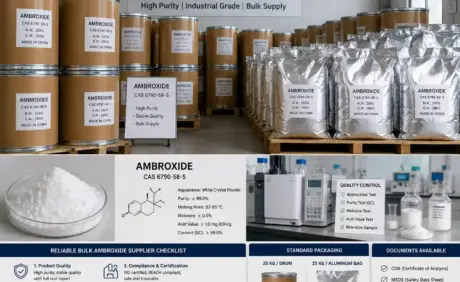
| Ambroxide | 6790-58-5 | ≥99.0% | 74-77°C | White crystal | Soluble in ethanol and other organic solvents |
| Sclareolide | 564-20-5 | ≥99.0% | 124-127°C | White to off-white crystalline powder | Insoluble in water; soluble in ethanol, fragrance bases, and oils |
Ambroxide and Super Ambroxide
Ambroxide-type materials contribute an amber-woody dry-down, diffusion, and persistence. They can support citrus, aromatic, woody, and amber structures when the odor profile matches the brief.
Their crystalline form and defined melting ranges require attention during weighing, dissolution, cooling, and storage. Clarity checks should cover the concentrate, finished alcohol level, and expected storage temperatures.
Ambrocenide
Ambrocenide has a potent woody-amber profile. Small dosage changes can shift diffusion and odor balance, especially in transparent florals, citrus accords, and soft musk structures. A controlled dosage series helps identify the level that supports the composition while preserving its intended character.
Sclareolide
Sclareolide provides a low-volatility component for compatible fragrance concentrates and oil systems. Its higher melting point affects dissolution temperature, cooling rate, and storage behavior. Stability work should include recrystallization checks under the warehouse and transport temperatures expected for the product.
A Repeatable Summer Test Protocol
A useful protocol recreates the intended application, package, and storage conditions. It also keeps concentration, solvent, maturation time, application amount, and substrate constant across every sample.
Prepare a Control and Dosage Series
Prepare one untreated control and at least two fixative levels. Code the samples for blind evaluation. Record exact weights, order of addition, dissolution temperature, mixing time, maturation time, and storage condition.
Evaluate Odor at Fixed Intervals
Record observations at 15 minutes, 2 hours, 6 hours, and 24 hours. Score these attributes separately:
- Opening definition
- Diffusion and projection
- Heart-to-base continuity
- Odor character
- Residual strength
- Color and clarity
- Sediment or crystal formation
- Skin, blotter, and fabric behavior where relevant
A successful sample keeps the intended opening and dry-down while meeting the physical-stability target.
Test the Finished Product Base
Performance in perfumer’s alcohol may change in body oil, shampoo, cream, detergent, or fabric spray. Water, surfactants, emollients, pH, preservatives, and packaging materials can alter odor release and stability.
The final test plan should use the production base and package. Warm, cool, and room-temperature cycles reveal haze, color shift, precipitation, caking, leakage, and odor change before scale-up.
Supplier Review for Fragrance Fixatives
A purchasing specification should cover chemical identity, purity, odor consistency, physical form, documents, packaging, storage, and scale-up support.
Identity, Purity, and Batch Data
Request a current certificate of analysis, product specification, safety data sheet, and representative sample. Compare the odor profile and analytical values across available batches. Potent woody-amber materials may show a clear sensory difference from a small change in composition or impurity profile.
Solubility, Packaging, and Storage
Each solubility statement should identify the solvent, concentration, temperature, and test method. Packaging review should cover moisture protection, heat exposure, liner compatibility, crystal size, caking, melt behavior, and resealing after use.
These details affect weighing, dissolution time, batch consistency, and operator handling in production.
Samples, Documents, and Scale-Up Support
Before bulk purchasing, confirm sample availability, lead time, minimum order quantity, batch traceability, shelf life, storage conditions, and documents for the target market. Share the intended application, solvent system, dosage range, and annual volume so the supplier can provide relevant technical information.
BWX Fragrance Fixative Supply
Henan Boweixin Biotechnology Co., Ltd., trading as BWX, supplies fine chemical raw materials for fragrance, cosmetics, nutraceutical, pharmaceutical, and daily-chemical applications. Its company profile lists research and development, production, quality control, and international export capabilities.
BWX reports ISO 9001, HACCP, and ISO 22000 management credentials and sales to over 30 countries and regions. Buyers should request current certificates and confirm the scope that applies to the product and manufacturing site under review.
For Super Ambroxide, Ambroxide, Ambrocenide, or Sclareolide sourcing, buyers can request current specifications, batch documents, samples, packaging details, and lead times before scale-up.
Contact BWX for current specifications and sample availability.
Practical Answers for Formulators and Buyers
Fragrance Fixative Function
A fragrance fixative contributes low-volatility structure and supports the dry-down. Its effect depends on odor character, dosage, solvent, fragrance concentration, and finished product.
Hot-Weather Fragrance Performance
Heat raises vapor pressure and accelerates evaporation. Humidity, perspiration, skin condition, application amount, and base structure determine the wear experience.
Fixatives for Alcohol-Based Perfume
Ambroxide-type materials, woody-amber materials, and Sclareolide can suit alcohol formulas when their odor and solubility match the brief. Bench testing confirms clarity, balance, and stability at the intended concentration.
Summer Performance Testing
Compare an untreated control with several dosage levels. Use fixed evaluation times, separate sensory and stability scores, and test the production base through warm, cool, and room-temperature cycles.
Supplier Documentation
The purchasing file should include the current specification, certificate of analysis, safety data sheet, sample, packaging details, storage guidance, lead time, traceability, shelf life, and target-market documents.