The Ultimate Guide to Synthetic Fragrance Ingredients: Sourcing Cetalox, Ambroxide, and Premium Aroma Chemicals for Bulk Manufacturing
Synthetic fragrance ingredients give manufacturers something natural extracts often cannot provide on their own: repeatable odor profiles, scalable supply, and precise control over performance. Yet buying them in bulk is not a simple price comparison. Cetalox and Ambroxide may both sit in the amber-woody family, but a purchasing team still needs to verify identity, odor quality, analytical data, documentation, packaging, and lot consistency before approving either material.
This guide is for fragrance houses, personal-care manufacturers, contract formulators, and procurement teams qualifying premium aroma chemicals. It explains what to compare, which documents matter, and how to move from a promising sample to a controlled commercial order. Buyers beginning a category review can first examine BWX’s synthetic fragrance ingredients portfolio to see how individual amber materials fit within a wider sourcing program.
Why Synthetic Aroma Chemicals Matter in Manufacturing
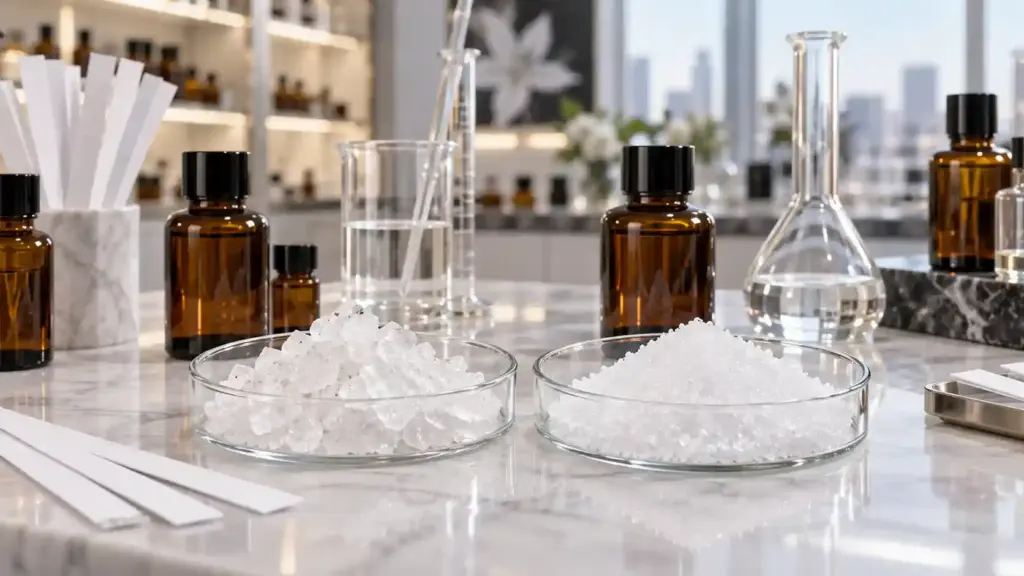
A modern fragrance formula may contain materials chosen for lift, diffusion, body, texture, or drydown. Synthetic aroma chemicals let the formulator work with defined materials rather than depending entirely on harvest conditions or variable natural extracts. For bulk manufacturing, that precision supports reproducible batching and clearer quality specifications.
The commercial value goes beyond scent. A well-qualified ingredient can simplify incoming inspection, help teams investigate deviations, and give procurement a consistent basis for comparing suppliers. This is especially useful in fine fragrance, body care, detergents, fabric care, and home fragrance, where the odor must survive different bases and processing conditions. BWX’s daily chemical application overview provides a useful route into these end-use categories.
Still, “synthetic” does not mean interchangeable. Two products with similar descriptions can differ in chemical identity, isomer profile, residual solvent pattern, physical form, or sensory cleanliness. The approved specification and retained reference sample must lead the decision.
Cetalox and Ambroxide: Similar Territory, Separate Buying Decisions
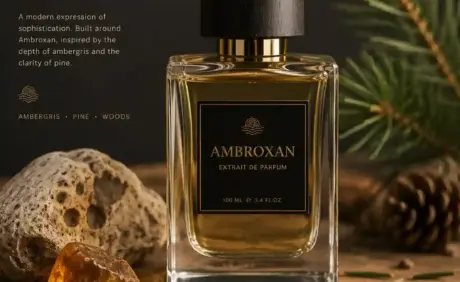
Cetalox and Ambroxide are used to build refined ambergris-style effects, add dry warmth, and support the lasting character of a composition. They can work in fine fragrance as well as scent systems for personal and household products. Their shared olfactive territory, however, should not encourage substitution without testing.
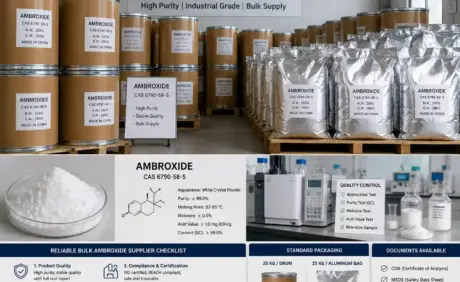
Ambroxide is identified in the project specifications as CAS 6790-58-5 with the molecular formula C16H28O. It is supplied as a white crystalline solid and is described as amber, woody, and dry, with possible green, pine, cypress, or tea facets. It is insoluble in water and soluble in organic solvents such as ethanol. Buyers can review the dedicated Ambroxide aroma chemical page before requesting current batch documents.
Cetalox is also listed as CAS 3738-00-9 and formula C16H28O. It is positioned for high-end fragrance formulas where a clean ambergris character and a polished base are required. The Cetalox fragrance ingredient page is the appropriate target for product-specific enquiries.
The practical rule is straightforward: qualify each commercial grade on its own. Match the label, CAS number, specification, certificate of analysis, physical form, and sample. Then compare performance in the actual base. A trade name or odor-family description cannot establish equivalence.
Start With the Application, Not the Catalog
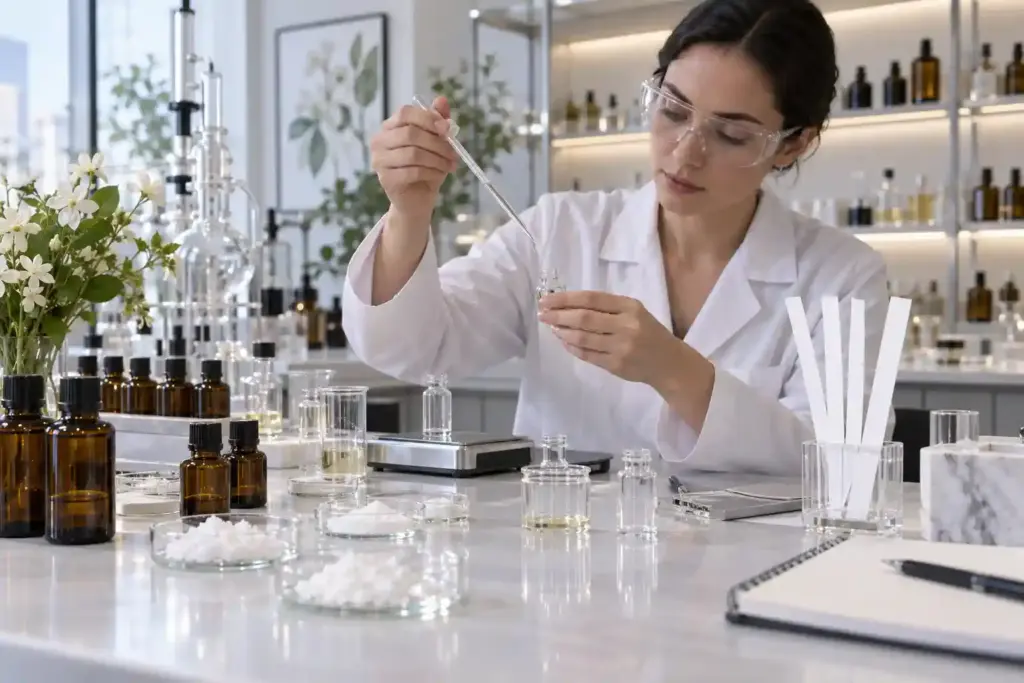
The best sourcing brief begins with the finished product. A Cetalox or Ambroxide grade that works beautifully in an alcoholic perfume may behave differently in a surfactant-rich wash product, an emulsion, a solid air-care format, or a fabric-care base.
Before contacting an aroma chemicals supplier, document:
- the product category and target market;
- the intended odor direction and role of the material;
- the carrier or base system;
- expected processing temperature and order of addition;
- target dosage range and cost-in-use limit;
- required regulatory and customer documents;
- annual volume, batch size, and delivery schedule.
This brief turns a vague request for “premium Ambroxide” into a testable requirement. It also helps the supplier flag solubility, dilution, packaging, or transport questions early.
The Seven Checks That Matter Most
1. Confirm Chemical Identity
Use the CAS number, chemical name, formula, and specification to prevent confusion among Ambroxide, Cetalox, Ambrocenide, and diluted commercial products. Ambrocenide, for example, is a separate material with CAS 211299-54-6. Its safety information must never be transferred to Ambroxide simply because both are associated with powerful amber effects.
2. Evaluate Odor Quality, Not Purity Alone
A high assay result does not automatically guarantee a clean odor. Trace isomers or residual solvents may affect the sensory profile even when the headline purity looks acceptable. Evaluate the neat material where appropriate, a controlled dilution, and the finished application. Record strength, character, off-notes, and drydown at fixed time points.
3. Review Current Batch Evidence
Request a current certificate of analysis and compare its test methods and acceptance limits with your purchasing specification. Depending on the material and market, the review package may also include an SDS, TDS, flow chart, allergen information, and IFRA-related documentation. BWX’s custom chemical services page is a suitable internal route for discussing document and application-support needs.
4. Run a Controlled Sample Trial
Test all candidates at the same concentration, in the same base, with the same maturation time and evaluation schedule. A useful approval sequence is blotter or dilution screening, bench formula, accelerated stability where appropriate, pilot batch, and commercial confirmation. Retain an approved sample so the first production lot can be checked against it.
5. Check Batch Consistency and Traceability
Ask how lot numbers connect the COA, packing label, shipment, and retained sample. Establish what happens when incoming results or odor evaluation differ from the approved reference. A clear deviation and retest process is more valuable than a vague promise of “stable quality.”
6. Examine Packaging and Logistics
Solid fragrance materials may be packed in inner PE or aluminum bags and outer fiber drums; a 25 kg drum is a common commercial format in the project records. Samples may be offered in smaller quantities for evaluation. Confirm the actual pack size, liner, seal, palletization, storage conditions, shipment mode, and shelf-life statement in the quotation and current documents.
7. Calculate Total Landed Risk
Unit price is only one part of cost. Include sample approval time, testing, freight, customs handling, minimum order quantity, lead time, rejected-lot exposure, and the cost of reformulation if odor quality changes. A slightly lower price can become expensive when documentation or consistency is weak.
A Practical Supplier Qualification Workflow
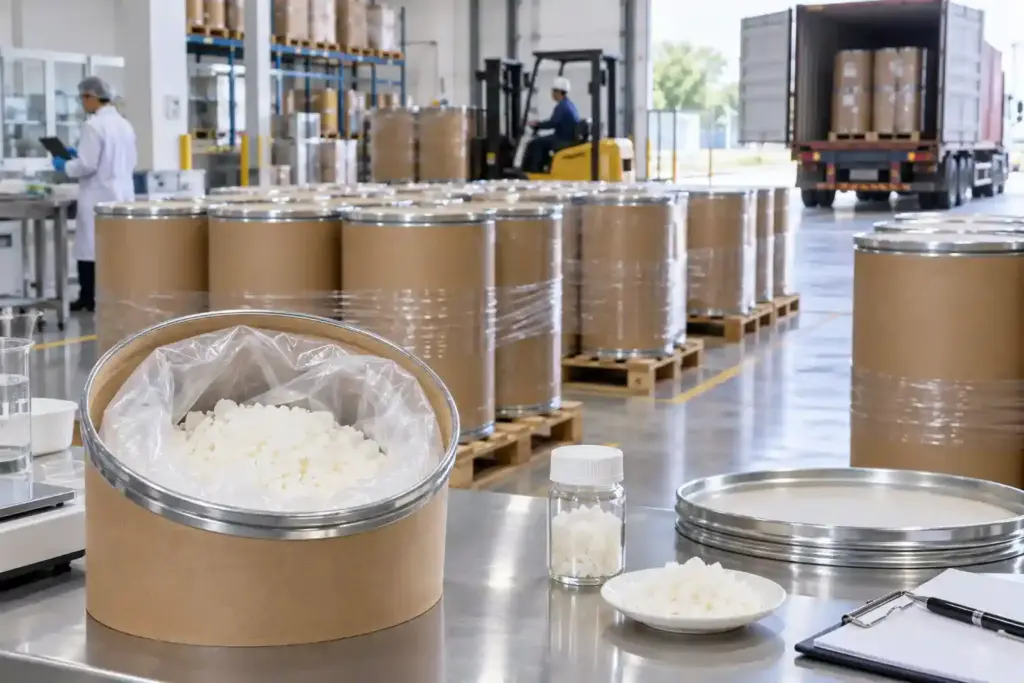
Begin with a short list of suppliers that can identify the material precisely and provide current documents. Send every supplier the same request so comparisons remain fair. Ask for the target grade, batch COA, SDS, TDS, available compliance documents, sample size, MOQ, standard packaging, lead time, and Incoterm.
Next, have procurement and the fragrance team score the samples separately. Procurement should review documentation, traceability, capacity, logistics, and commercial terms. The fragrance team should assess odor profile, strength, clarity, dissolution, compatibility, and performance in the intended formula. Quality staff should confirm that the proposed specification and methods are suitable for incoming control.
After approval, define change-notification expectations. A supplier should communicate material changes that could affect odor or processing, such as specification revisions, manufacturing-site changes, packaging changes, or significant process changes. For ongoing orders, trend critical results rather than filing each COA without comparison.
Common Sourcing Mistakes
One common mistake is treating Cetalox, Ambroxide, and Ambrocenide as names for the same product. Another is approving a material from a neat smelling strip but skipping the finished base. Teams also lose control when they accept an old COA, fail to record the sample lot, or let a commercial shipment arrive in packaging that was never reviewed.
Overly broad compliance claims are another warning sign. Requirements vary by material, use level, product category, and destination market. Ask for the exact document that supports the exact claim, then have a qualified regulatory professional assess the finished formula.
Finally, avoid choosing a supplier only because it offers the lowest MOQ or fastest quoted lead time. Those terms matter, but qualification should also cover what the supplier will do when sensory or analytical results fall outside expectations.
Questions to Put in Your RFQ
Use a concise request for quotation to surface gaps before commercial negotiation:
- What is the exact product name, CAS number, assay method, and physical form?
- Can you provide a current batch COA, SDS, and TDS?
- Which allergen or IFRA-related documents are available for this grade?
- What sample size, commercial MOQ, packaging, and lead time apply?
- Can you provide chromatographic data when required for qualification?
- How are complaints, retesting, and lot traceability handled?
- What changes trigger customer notification?
- Which shipping modes and export documents are available for the destination?
When the technical and commercial requirements are ready, send them through Contact BWX and request a matched sample and documentation set. This places the enquiry in the final part of the reading path rather than crowding every section with sales language.
FAQ
Are Cetalox and Ambroxide interchangeable?
Do not assume they are. Even when materials occupy a similar amber-woody space, qualify the exact grade in the finished base and confirm its identity, specification, and sensory profile.
Which document should a buyer request first?
Start with the current batch COA, then review the SDS, TDS, and application- or market-specific documents. The required set depends on the material, destination, and end use.
How large should the first order be?
Use enough material for laboratory and pilot confirmation before scaling. Sample and MOQ options vary, so confirm them in the quotation rather than treating a general range as a guarantee.
Is the highest-purity material always the best choice?
No. Assay is essential, but odor cleanliness, consistency, residual profile, compatibility, documentation, and cost in the finished formula also determine suitability.
Conclusion
Successful bulk sourcing of synthetic fragrance ingredients begins with a clear application brief and ends with controlled lot approval. For Cetalox, Ambroxide, and other premium aroma chemicals, buyers should verify identity, assess odor in the real base, review current batch evidence, confirm packaging and logistics, and define how deviations and changes will be handled. That discipline protects both fragrance quality and manufacturing continuity while giving procurement a defensible basis for supplier selection.