Product Introduction
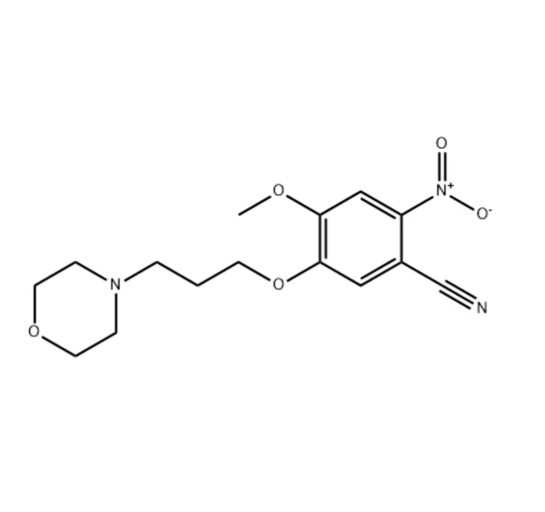
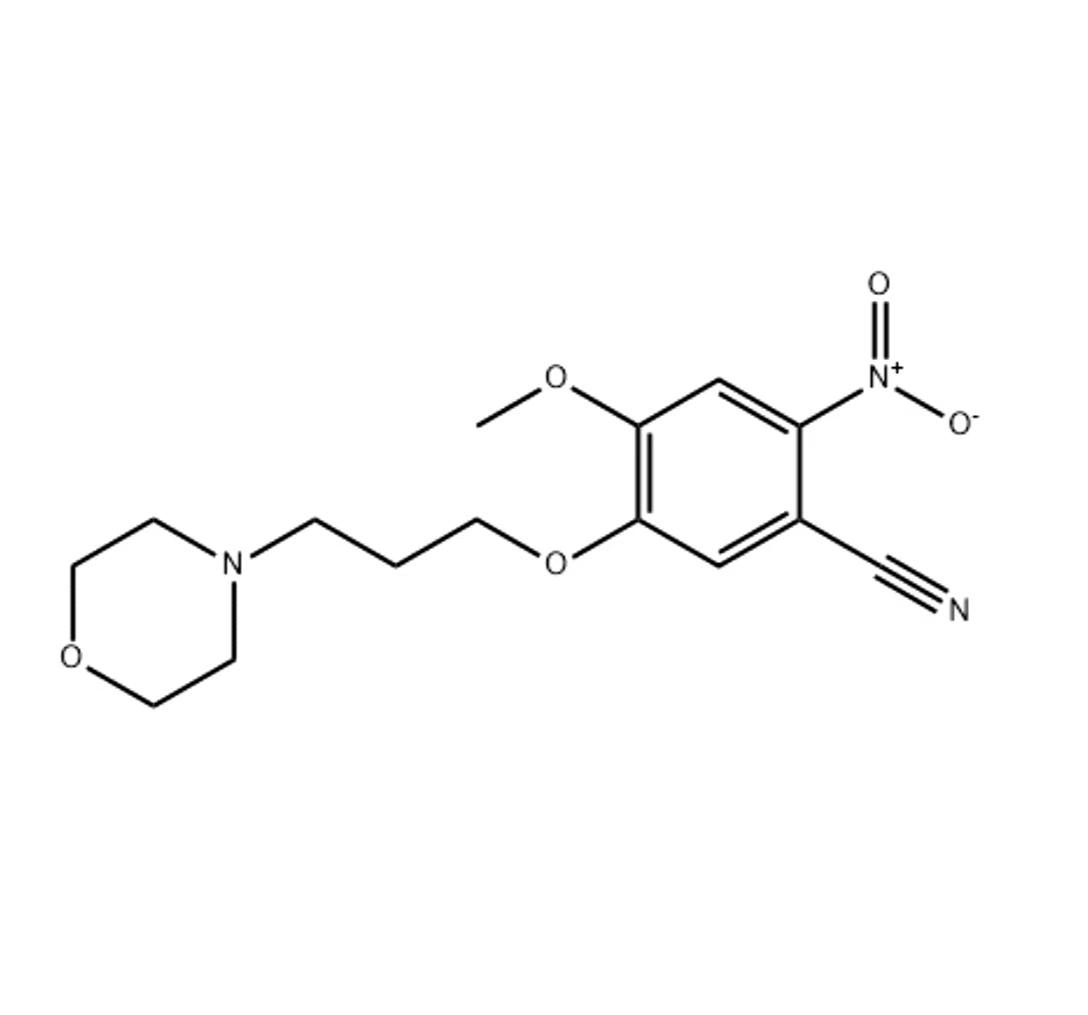
Serving as a crucial synthesis intermediate, 4-Methoxy-5-(3-morpholinopropoxy)-2-nitrobenzonitrile (CAS: 675126-26-8) is widely utilized in process development for advanced tyrosine kinase inhibitors (TKIs) and heterocyclic research compounds. Structurally, the morpholine tail improves intermediate solubility during liquid-phase synthesis, while the nitro-nitrile arrangement allows clean, predictable hydrogenation and cyclization pathways. Manufacturing evaluations confirm that its crystalline profile minimizes clumping during scaling. Backed by strict impurity control and complete COA/MSDS documentation for purity review, we guarantee reliable batch consistency. For optimal shelf life, store this stable solid in cool, dry conditions.
CAS:675126-26-8
Properties: Yellow to orange-yellow solid powder
Solubility: Slightly soluble in water; readily soluble in organic solvents such as dichloromethane, ethyl acetate, N,N-dimethylformamide, and dimethyl sulfoxide.
Melting point: 127°C
Purpose: A key intermediate in the synthesis of gefitinib (ZD1839), which undergoes nitro reduction to prepare 2-amino-4-methoxy-5-(3-morpholino-propoxy)benzonitrile, subsequently used for the synthesis of EGFR tyrosine kinase inhibitor-based antitumor drugs.
Storage conditions: Keep sealed, dry, protected from light, and at room temperature.
Product Characteristics
- Multi-Functional Reactivity: The molecule features highly reactive nitro (-NO2) and nitrile (-CN) groups, alongside ether linkages, offering multiple reaction sites for chemical transformation.
- Facile Cyclization: Reduction of the nitro group allows smooth cyclization with the adjacent nitrile group to build the quinazoline scaffold, a privileged pharmacophore in cancer therapy.
- Reliable Quality: It typically appears as a yellow to orange crystalline powder and exhibits excellent chemical stability for industrial storage and transport.
Product Uses
- Gefitinib Manufacturing: It acts as the key intermediate to manufacture Gefitinib, a first-generation EGFR tyrosine kinase inhibitor (TKI).
- Targeted Cancer Drug Development: Chemists use it to synthesize various small-molecule inhibitors containing the quinazoline core.
- Solubility Optimization: Drug designers utilize its morpholinopropoxy chain to enhance the solubility and pharmacokinetic profiles of candidate drug molecules.
Application Scenarios
- Commercial API Production: Generic drug manufacturers and CDMOs purchase this compound in bulk to produce Gefitinib and related APIs.
- Oncology Drug Discovery: Medicinal chemistry laboratories employ it as a structural building block to develop next-generation EGFR inhibitors designed to overcome drug resistance.
- Heterocyclic Chemistry Research: Academic and scientific institutions use it to study regioselective reactions on highly substituted benzene rings.