Product Introduction
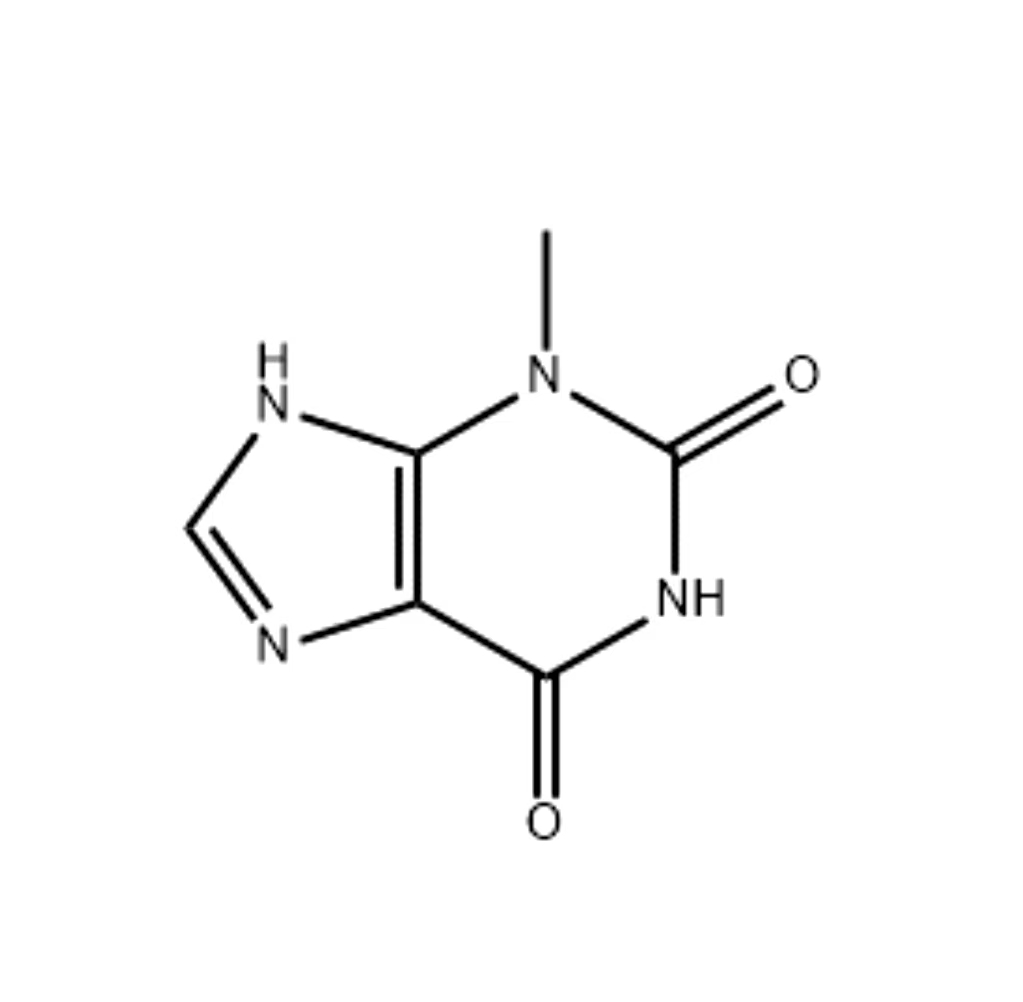
3-Methylxanthine (CAS: 1076-22-8) serves as a core building block for synthesizing xanthine-based research tools, adenosine receptor ligands, and bronchodilator intermediates. Its purine ring system undergoes clean regioselective alkylation, simplifying step-by-step molecular construction during process development. Manufacturing evaluations show its crystalline form resists moisture absorption, preventing clumping during industrial-scale handling. With strict impurity control, we guarantee high batch consistency supported by comprehensive COA and MSDS documentation for purity review. Keep this stable solid in a tightly sealed container at room temperature.
CAS:1076-22-8
Properties: A crystalline powder ranging from white to light brown, solid at room temperature, without distinct odor, and stable in nature.
Solubility: Slightly soluble in dimethyl sulfoxide and methanol (soluble upon heating); almost insoluble in water; insoluble in weakly polar solvents such as petroleum ether and n-hexane.
Melting point:>300°C (liter)
Usage: A key intermediate in pharmaceutical synthesis, commonly used as an impurity reference standard for xanthine drugs such as theophylline and caffeine, and serves as a critical raw material for the development of phosphodiesterase (PDE) inhibitor drugs. It is also utilized in synthetic research for nucleoside drugs and bronchodilators, with extensive applications in drug quality control and novel drug development.
Storage conditions: Keep sealed, protected from light, at a low temperature of 2–8°C in a dry place, away from oxidizers, strong acids, and strong bases, and avoid high temperatures, high humidity, and direct sunlight.
Product Characteristics
- Chemical Structure: It belongs to the purine compound family.
- Physical Form: It is a white to off-white crystalline powder.
- Solubility: It dissolves well in hot water and alkaline solutions.
Product Uses
- Synthesis Precursor: Manufacturers use it to produce respiratory drugs.
- Pharmacology Research: Scientists use it to study adenosine receptor antagonism.
- Reference Standard: Testing labs use it to analyze caffeine metabolism.
Application Scenarios
- Drug Discovery: Pharmaceutical companies use it to design new bronchodilators.
- Clinical Testing: Medical centers use it to monitor drug levels.
- Academic Research: University labs use it for biochemistry experiments.