Product Introduction
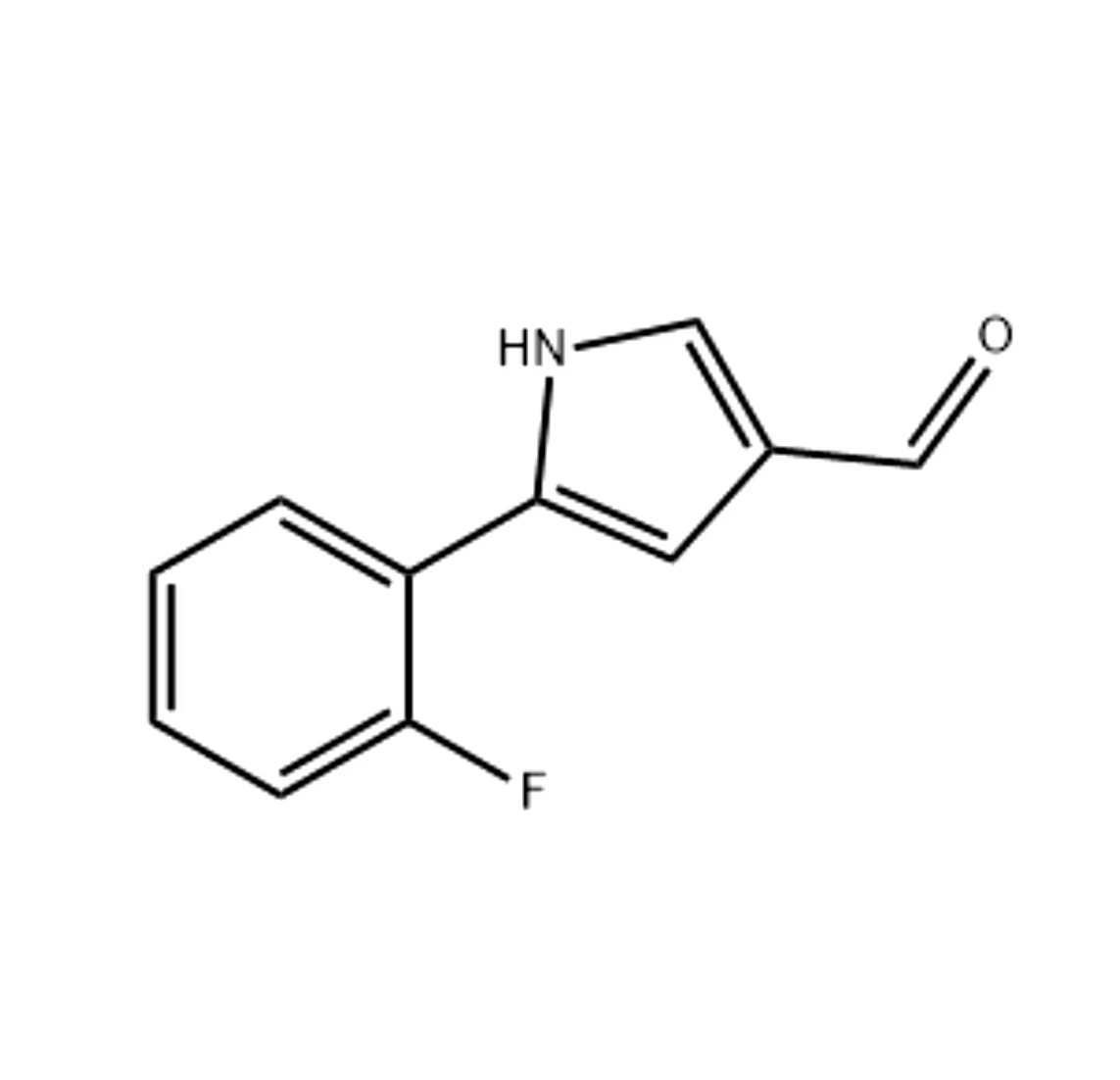
5-(2-Fluorophenyl)-1H-pyrrole-3-carbaldehyde (CAS: 881674-56-2) is a versatile building block and synthesis intermediate. It is heavily utilized in process development for novel potassium-competitive acid blockers (PCABs) and pyrrole-based research molecules. Structurally, the active formyl group drives clean condensation and amination reactions, while the fluorophenyl ring offers excellent chemical stability during manufacturing evaluation. With strict impurity control, we deliver high batch consistency, backed by full COA and MSDS documentation for your purity review. Store this powder under inert gas in a cool, dark environment to prevent oxidation.
CAS:881674-56-2
Properties: Solid, ranging from white to pale yellow
Melting point: 142–145°C
Solubility: Highly soluble in DMF, DMSO, dichloromethane, and ethyl acetate; slightly soluble in methanol; almost insoluble in water.
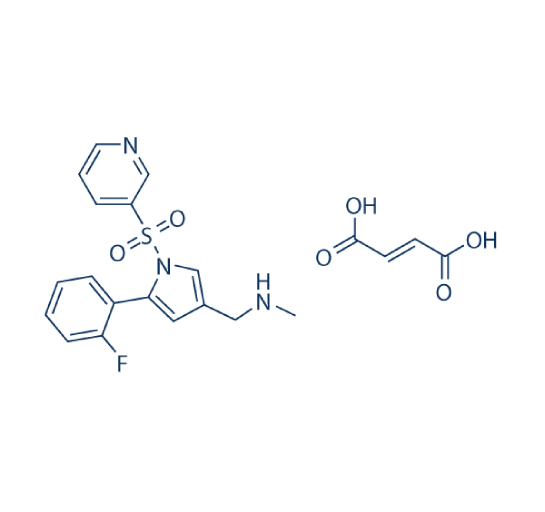
Purpose: The core synthetic intermediate of the potassium ion competitive acid blocker Volonrazan (Volonrazan), used for the preparation of the active pharmaceutical ingredient (API) Volonrazan Fumarate. It is widely applied in the research and production of medications for digestive tract disorders such as gastric ulcers and reflux esophagitis.
Storage conditions: Store in a sealed and dry container, protected from light, at room temperature, and away from oxidizing agents.
Product Characteristics
- Unique Structure: The molecule successfully integrates a pyrrole ring, a 2-fluorophenyl group, and a highly reactive 3-formyl group.
- High Reactivity: The aldehyde group (-CHO) easily undergoes reductive amination, addition, or condensation reactions, enabling the efficient construction of complex pharmacophores.
- Excellent Stability: It typically appears as a yellow to off-white solid and maintains good chemical stability under dry, dark storage conditions.
Product Uses
- Vonoprazan Synthesis: It acts as the indispensable key precursor for manufacturing Vonoprazan, a breakthrough potassium-competitive acid blocker (P-CAB).
- Pyrrole Derivative Construction: Chemists use it to synthesize other novel pyrrole-based bioactive molecules with potential antitumor, anti-inflammatory, or antibacterial properties.
- Kinase Inhibitor Development: It helps prepare advanced research molecules targeting specific biological pathways.
Application Scenarios
- Industrial API Manufacturing: Pharmaceutical companies and CDMOs purchase this intermediate in bulk to scale up the production of anti-acid therapies.
- Medicinal Chemistry R&D: Drug discovery laboratories utilize this compound as a versatile building block to design next-generation gastrointestinal treatments.
- Custom Chemical Synthesis: Fine chemical manufacturers employ it in advanced heterocyclic synthesis research and pilot-scale trials.