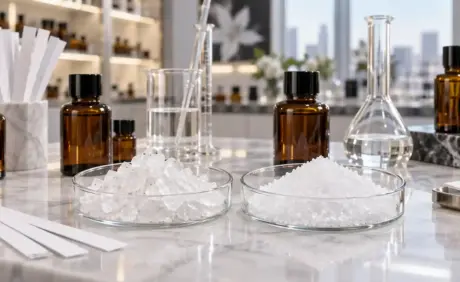
Cetalox and Ambroxide often appear together in ambergris-style fragrance briefs. Both can add dry, woody warmth, but they are separate aroma chemicals and are not automatically interchangeable.
The practical choice depends on the finished formula, the grade specification, storage, and commercial-batch documents. Cetalox is commonly selected for polished ambergris character and radiance. Ambroxide is often chosen when dry amber, woody, pine-like, green, or tea facets are wanted. The final decision should come from side-by-side testing.
For fragrance houses, personal-care manufacturers, home-care formulators, and procurement teams, the starting point is BWX’s synthetic fragrance ingredients portfolio. The useful question is not which name sounds stronger. It is which material, grade, and supply program fit the intended application.
Cetalox and Ambroxide at a Glance
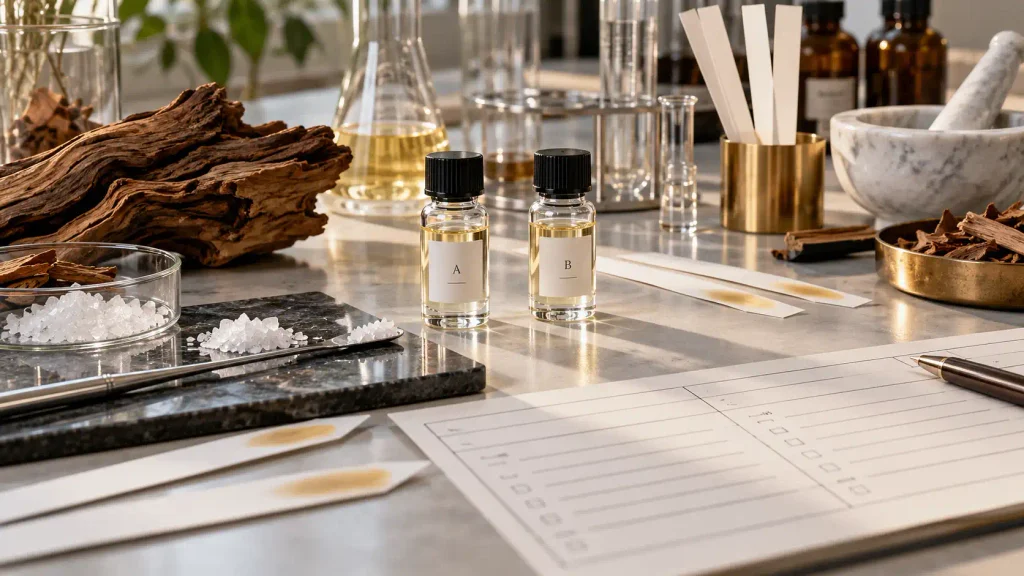
The first difference is identity. Cetalox is listed as CAS 3738-00-9, formula C16H28O, molecular weight 236.00. Ambroxide, also called Ambroxane, is CAS 6790-58-5, with the same formula and molecular weight 236.39. Similar formulas do not remove separate qualification.
| Comparison point | Cetalox | Ambroxide |
| CAS number | 3738-00-9 | 6790-58-5 |
| Formula | C16H28O | C16H28O |
| Typical appearance | White to nearly white crystals or powder | White crystals |
| Sensory direction | Ambergris, elegant woody, radiant | Pure ambergris, clear amber, dry woody, pine, cypress, green, tea facets |
| Melting point | 75-85 C | 74-77 C |
| Water behavior | Insoluble in water | Insoluble in water |
| Typical use direction | High-end perfume and fragrance formulas | Fine fragrance, consumer fragrance, home care, and personal care |
The table is a qualification starting point, not a substitution rule. Match the name, CAS number, physical form, assay, and batch number across the documents before comparing performance.
How the Scent Profiles Differ
Cetalox: Polished Ambergris and Radiance
Cetalox has an ambergris and elegant woody profile, with exceptional diffusivity and radiance. Its ambergris effect can run from the opening through the base, making Cetalox useful when a formula needs an airy, refined effect rather than heavy sweetness.
In practice, Cetalox may connect bright notes to the drydown, give structure to a floral accord, or add lift to a clean musk. The result depends on dosage, solvent, surrounding materials, and maturation time. The finished base determines whether it feels smooth, dry, transparent, or too prominent.
Ambroxide: Dry Amber, Woods, and Green Facets
Ambroxide has a pure ambergris, clear amber, and woody profile, with dry facets similar to pine and cypress and additional green and tea nuances. That combination can feel more textured and dry than a simple amber description suggests.
Ambroxide can support a modern woody base, a fresh aromatic composition, or a persistent amber backbone without a thick balsamic impression. It is also used in consumer fragrance, home care, and personal care, so the sourcing brief should name the finished category. BWX’s Ambroxide specification can be requested with the current batch documents.
Why Similar Amber Descriptions Can Mislead
“Ambergris,” “amber,” and “woody” are broad sensory labels. They do not describe intensity, diffusion, cleanliness, texture, or the way an ingredient behaves in a surfactant base or emulsion. Two materials can seem close on a paper strip and separate clearly after dilution or in a finished product.
Use the same solvent, concentration, maturation time, blotter format, and evaluation schedule. Record opening, drydown, strength, off-notes, and formula compatibility.
Stability Means More Than a Shelf-Life Number
A material can be stable in normal storage and still perform poorly when its container is repeatedly opened, heated, or handled without lot control. Procurement stability includes identity, physical condition, storage environment, and batch consistency.
Cetalox Storage Considerations
Cetalox should be kept in a sealed container away from light and heat. It is a white to nearly white crystal or powder, with a 75-85 C melting point and solubility in 95% ethanol, DPG, or DEP at the stated ratio. Confirm the actual packaging, seal, and shelf-life position.
Ambroxide Storage Considerations
Ambroxide should be stored in a sealed, dry, room-temperature location away from direct sunlight, fire sources, and oxidants. It has a 74-77 C melting point, GC purity of at least 99.0%, loss on drying of no more than 0.5%, and dissolution in organic solvents such as ethanol. These figures help define incoming checks, but do not replace the current batch COA.
Physical Form and Handling
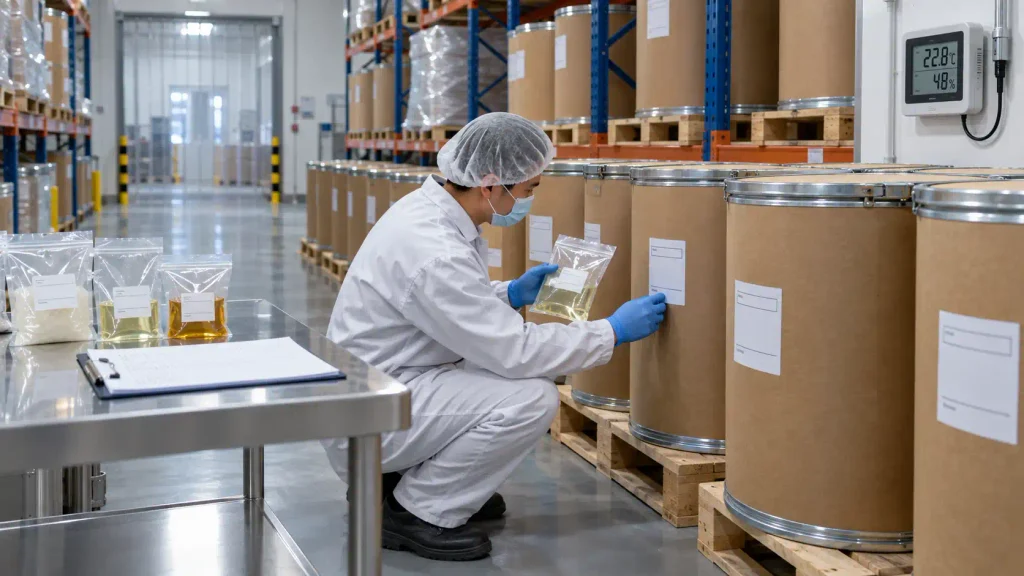
Both materials are supplied as solids, so moisture control, closure integrity, and temperature history matter. Caking, discoloration, unexpected odor, or changed dissolution should trigger an investigation. Ask whether the sample and commercial lot use the same grade and whether a retained reference is available.
Ask BWX for the current COA, SDS, and TDS, storage guidance, and application notes. The document set should identify the exact product and batch, not only a family name such as amber aroma chemical.
Which Material Fits Which Application?
Fine Fragrance
Choose Cetalox when the brief emphasizes elegant ambergris radiance, diffusion, and a polished woody base. Choose Ambroxide when a drier amber structure with green, pine, cypress, or tea facets supports the formula. Keep dosage and evaluation identical when testing both.
Personal Care and Home Care
Surfactants, emulsions, polymers, and functional additives may affect clarity, dissolution, and drydown. Ambroxide is used in consumer fragrance, home care, and personal care, while Cetalox is positioned toward high-end perfume and fragrance formulas. The finished product and target-market requirements remain decisive.
Solid or Concentrated Formats
Solid fragrance, concentrated bases, and low-water systems require attention to dissolution and crystallization. Neither material is water soluble. Prepare a measured stock solution when needed, use a compatible solvent, and observe the formula after maturation. A clear room-temperature solution may change during transport or seasonal temperature changes.
For a wider view of end uses, BWX’s synthetic fragrance applications connect the material choice with fine fragrance, consumer products, and personal-care development.
What to Request in a Wholesale RFQ
A useful RFQ makes the two materials comparable. Include finished product, target market, annual volume, sample quantity, preferred pack size, and delivery window. Request the following for each candidate grade:
- Exact product name, CAS number, formula, physical form, and assay method.
- Current batch COA with test results and acceptance limits.
- SDS and TDS, including storage and handling conditions.
- Allergen, IFRA-related, REACH, or other market documents where applicable.
- Sample lot number, sample quantity, MOQ, standard packaging, and lead time.
- Solubility or dilution guidance for the intended carrier system.
- Retained sample policy, change-notification process, and complaint or retest procedure.
For solid aroma chemicals, BWX can quote 1 kg packs and 25 kg drums, with customized packaging available as needed. The quotation should confirm the inner bag, outer drum, seal, shipping method, and storage statement.
How to Compare Samples Without Creating Noise
Run the comparison in stages. Start with identity and document review, then evaluate a controlled dilution on blotter. Move better candidates into the same finished base at the same dosage. Record clarity, dissolution time, odor strength, character, drydown, and off-notes. Include a pilot batch or stability check where appropriate.
Procurement should score documentation, MOQ, lead time, packaging, and supply continuity. The fragrance team should score odor and formula performance, while quality confirms the specification for incoming inspection. Keeping the views separate prevents price from dominating the decision.
The approved sample should be linked to its lot number, COA, packing label, and shipment. If the first commercial batch differs in odor or dissolution, a traceable record makes retesting and corrective action faster. Contact BWX with the application, grade, quantity, and document requirements together.
Common Sourcing Mistakes
The most common mistake is using Cetalox, Ambroxide, and Ambrocenide as synonyms. Ambrocenide has a different CAS number and safety documentation. Another mistake is approving a neat crystal or single blotter without testing the intended base.
Old COAs create another blind spot. Review the current batch document against the agreed specification and keep the sample lot traceable. A sealed drum kept in a hot, bright, or damp area may not represent the specified condition.
Finally, avoid using “stable supply” as a substitute for a plan. Ask about standard MOQ, buffer stock, production timing, shipping lanes, and what happens when an analytical or sensory result does not match the approved reference.
FAQ
Are Cetalox and Ambroxide the same material?
No. They have different CAS numbers and should be qualified as separate aroma chemicals, even though both occupy an ambergris-style olfactive space.
Which one smells stronger?
Strength depends on grade, dosage, dilution, formula, and evaluation conditions. Cetalox is described as radiant and diffusional, while Ambroxide is described with dry amber, woody, pine, cypress, green, and tea facets. A controlled side-by-side test is more reliable than a general strength ranking.
Can Ambroxide replace Cetalox in a formula?
Only after a reformulation trial. Confirm identity, dosage, solubility, odor profile, drydown, and finished-product stability before approving a substitution.
What documents should a wholesale buyer request?
Start with the current COA, SDS, and TDS. Add allergen, IFRA-related, REACH, chromatographic, packaging, and origin documents according to the market and end use.
How should solid Cetalox or Ambroxide be stored?
Keep the sealed container in the temperature and light conditions stated in the current specification. Avoid moisture, direct sunlight, high heat, fire sources, and incompatible oxidants, and investigate any change in appearance or odor.
Conclusion
Cetalox and Ambroxide share an ambergris-style neighborhood, but they bring different sensory cues and different qualification questions. Cetalox is described as elegant, radiant, and woody. Ambroxide is described as clear amber and dry woody, with pine, cypress, green, and tea facets. Both require identity control, current batch documents, appropriate storage, and testing in the finished base.
For wholesale sourcing, the better choice is the material that fits the application and can be supplied consistently with a clear specification. Send BWX the target formula, market, annual volume, preferred pack size, and required documents before requesting a commercial quotation.