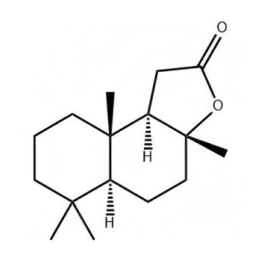
Product Introduction
Featuring a distinct woody-ambery profile, Sclareolide (CAS:564-20-5)brings dry tobacco and warm, creamy-coumarinic undertones to fragrance formulations. It acts as a reliable fixative within scent structures, rounding out sharp notes while significantly extending overall diffusion. This crystalline material works exceptionally well in fine perfumes, luxury cosmetics, and premium soaps. On a technical level, Sclareolide is highly stable, resists discoloration in finished formulas, and dissolves smoothly in standard perfumery solvents, ensuring consistent product performance and excellent shelf-life stability.
CAS:564-20-5
Appearance: White to nearly white solid
Sensory: Woody odor
Melting point: 124–126°C
Content: 99.0% min
Molecular weight: 250.380
Solubility: Soluble in chloroform (in small amounts), DMSO (in small amounts), and ethanol, diethyl phthalate; Poorly soluble in water.
Usage: As fragrances and essential oils used in perfumes and daily chemical products
Storage: Store in a sealed container, protected from light and heat.
Olfactory & Taste Description
- Core Odor Profile: Faint, warm, but highly tenacious amber-woody and hay/tobacco-like note.
- Odor Details: Unlike the explosive radiance of Ambroxan, Sclareolide has a very gentle and subtle scent. It delivers an elegant, natural sweetness reminiscent of aged tobacco, dry straw, cedarwood, and soft balsamic undertones, accompanied by a faint herbal tea-like facet.
- Taste/Flavor Profile: At very low concentrations, it provides a warm, rounded sweet mouthfeel, offering excellent flavor enhancement and bitterness-masking properties, making it highly valued in food and tobacco flavoring.
Product Uses
- Key Synthetic Precursor: Commercially, it serves as the most important and high-quality natural starting material for synthesizing the famous ambergris aroma chemical, Ambroxan (Ambroxide).
- Fixative & Flavor Modifier: It acts as an excellent fixative in fragrance formulations to extend longevity. In tobacco and food industries, it is used as a premium flavor enhancer to improve richness and smoothness.
- Cosmetic Active for Brightening & Soothing: Recent skincare research reveals it is an effective melanin synthesis inhibitor (by inhibiting α-MSH). It is increasingly used as a skin-brightening/anti-dark spot agent with anti-inflammatory and soothing properties.
- Thermogenic & Weight Management Agent: In dietary supplements, it is believed to stimulate adenylate cyclase (increasing cAMP levels), which promotes lipolysis (fat breakdown). Thus, it is widely used in weight-loss and sports nutrition formulations.
Application Scenarios
- Manufacturers widely use this ingredient in premium cigarettes and e-liquid flavorings. It effectively masks the harshness and irritation of tobacco smoke, making the smoke smoother and rounder while imparting a high-end natural hay-ambergris nuance to improve smoking comfort.
- Skincare brands incorporate this active into brightening serums, dark-spot correcting creams, and anti-aging lotions. It safely and gently reduces hyperpigmentation, evens skin tone, and maintains chemical stability in formulations without irritating sensitive skin.
- Supplement makers formulate it into capsules, tablets, or powders. They frequently combine it with caffeine, green tea extract, and other thermogenics to create pre-workout boosters, metabolism enhancers, and weight-management products.
- It acts as an excellent fixative in perfumes and fragranced body washes. Because it beautifully anchors volatile citrus and floral notes, it smoothly transitions the scent into warm, woody base notes, making the fragrance development more natural and soft.