Hexamidine diisethionate powder is used in skincare chiefly for antimicrobial preservation, with potential roles in clarifying cleansers, gels, lotions and body care. It has also attracted research interest in skin barrier function. For a formulator, the useful question is which role the ingredient will perform in a particular formula, and what testing will support that choice.
A cream protected against contamination and a cream that improves the appearance of blemishes make different promises. Evidence for one does not establish the other. Selecting the powder is therefore the beginning of development; preservation, stability, tolerability and any consumer benefit still need assessment in the finished product.
What is hexamidine diisethionate powder?
Hexamidine diisethionate is a salt of hexamidine, an aromatic diamidine. Its CAS number is 659-40-5, and its cosmetic ingredient name is HEXAMIDINE DIISETHIONATE. Confirm both identifiers when comparing quotations, since a similar chemical name can conceal a different salt or supplied concentration.
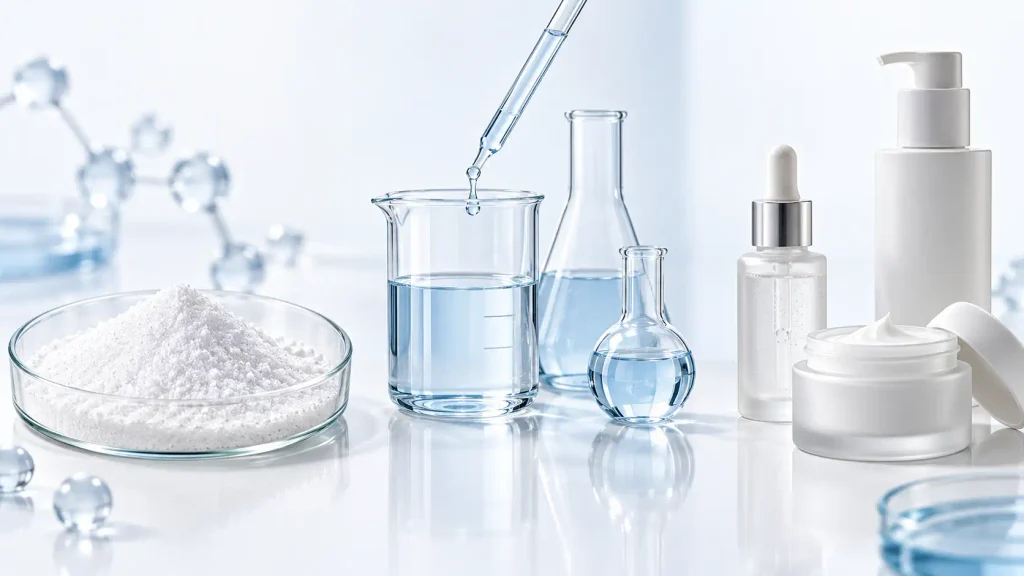
BWX supplies hexamidine diisethionate as a white to off-white crystalline powder with a stated HPLC purity of at least 99%. Standard packaging is 1 kg per pack or 25 kg per drum, with customized packaging available. Buyers comparing hexamidine diisethionate specifications should request a current batch certificate before setting an incoming-material specification.
Purity describes the raw material. It does not establish the dose, preservation performance or skin compatibility of a formula containing it. A procurement specification and a finished-product development brief should therefore remain separate documents with their own acceptance criteria.
Where can it be used in skincare?
Creams and lotions
Preservation is the clearest established application. In water-containing moisturizers, hexamidine diisethionate can be evaluated as part of the system that controls microbial contamination. Its suitability depends on the complete formula and the organisms that the preservation system must control.
Consider how the product will actually be used. A face cream repeatedly opened in a jar presents a different development scenario from a lotion dispensed through a pump. Record the packaging, expected handling and intended shelf life before screening preservation options. An ingredient’s antimicrobial reputation cannot establish the shelf life of either design.
Clarifying gels and toners
Hexamidine diisethionate is a candidate for clarifying skincare development where antimicrobial activity is relevant. For a gel or toner aimed at blemish-prone skin, define the intended cosmetic outcome before choosing the supporting tests.
For example, a clearer-looking complexion requires evidence from the finished formulation. A laboratory antimicrobial result does not show that a toner reduces visible blemishes, controls sebum or prevents blackheads. Avoid building several claims around a single ingredient result. Decide which benefit matters to the target customer, then design the formula and evaluation around that benefit.
Facial cleansers and body washes
Rinse-off products are another formulation setting to investigate. Here, the cleansing system, dilution during use and brief contact with the skin all matter to the development brief. Review the surfactants alongside hexamidine diisethionate rather than adding it after the cleanser has already been finalized.
Use comparative prototypes to check appearance, foam, viscosity and storage behavior. A cleanser may look acceptable immediately after manufacture yet change during storage. Keep the evaluation focused on the intended use: effective cleansing and a tolerable skin feel need their own evidence, even if microbial protection has already been demonstrated.
A useful comparison keeps the cleansing base, packaging and manufacturing method consistent while changing only the ingredient choice being investigated. This makes the result easier to interpret. If several ingredients change together, document that limitation rather than attributing every difference to hexamidine diisethionate.
Deodorants and body care
Antimicrobial activity also makes hexamidine diisethionate relevant to deodorant development. For a deodorant concept, assess the finished product against the intended odor-control claim and wear conditions. Do not translate that claim into reduced sweating without separate support.
Body lotions and cleansing gels may have different priorities, such as preservation, sensory comfort or compatibility with fragrance. Specify the role in each brief. Using one ingredient across a collection does not mean every formula can share the same test result or marketing language.
What does barrier-care research actually support?
Hexamidine has been investigated for effects on skin biology, including lipid-related pathways and markers of barrier function. Published research includes laboratory models and moisturizers containing multiple ingredients. These findings provide a reason to investigate barrier-focused formulations, while leaving questions about the contribution of hexamidine alone.
Some reported moisturizer studies combined hexamidine with niacinamide, and sometimes a peptide. Improvements observed with those combinations cannot automatically be assigned to hexamidine diisethionate powder by itself. Nor do they establish that any new cream using the ingredient will reproduce the result.
For a barrier-care project, choose the question precisely. Is the goal reduced moisture loss, improved hydration or better perceived comfort? Select appropriate measurements and compare the finished formula with a suitable control. Avoid promising eczema treatment, psoriasis relief or universal suitability for sensitive skin from this research background.
How should formulators assess concentration and compatibility?

The 2023 Cosmetic Ingredient Review conclusion supports hexamidine and hexamidine diisethionate under the reviewed cosmetic uses at concentrations of 0.10% or less. EU Cosmetics Regulation Annex V, entry 47, lists a maximum concentration of 0.1% for hexamidine and its listed salts as preservatives. These are reference boundaries, not an instruction to formulate every product at the maximum.
Check the requirements for the actual destination market and calculate the contribution from every supplied blend. A diluted solution and a high-purity powder are not interchangeable on a weight-for-weight basis. Have the responsible formulation and regulatory specialists confirm the calculation basis before approving a batch sheet.
Solubility also deserves a bench check. Published descriptions and supplier information differ, so a general water-solubility statement is insufficient for setting a production method. Confirm dissolution in the chosen vehicle at the intended concentration, then inspect it again after cooling and storage. Avoid assuming that clear mixing water guarantees a clear finished serum.
Set processing temperature, addition order and pH from approved technical documentation and prototype evidence. For a cationic ingredient, include surfactant and thickener compatibility in the screening plan. If a prototype develops haze, sediment or viscosity drift, investigate the combination before changing the dose.
What should buyers verify before scale-up?
Ask for batch-specific evidence rather than a generic purity statement. The certificate should identify the material and analytical method. Discuss impurity controls, residual solvents, microbial quality and any heavy-metal requirements relevant to your specification. Record which results are available and which still need testing.
Keep an approved sample and its paperwork together throughout development. When a later shipment arrives, compare its identity, appearance and certificate against the agreed specification. If the supplier changes the manufacturing route or analytical method, ask whether the original qualification remains applicable. This provides a practical link between purchasing and laboratory decisions.
The technical documentation and consultation process can help organize those questions before a trial order. Use that discussion to agree on the documents, sample quantity and specification being evaluated. Product-specific regulatory status and suitability still require confirmation for the intended market and use.
BWX recommends sealed storage in a cool, dry, ventilated location, protected from sunlight, moisture and excessive heat. Keep the material away from oxidants and strong acids or alkalis. Follow the current safety data sheet for handling and agree on storage conditions before the shipment arrives.
Before release, confirm that the finished formula meets its preservation, stability and tolerability criteria in the intended packaging. Assess efficacy claims separately. If the packaging, fragrance or cleansing system changes later, review whether the original evidence still applies. A successful first prototype is useful progress, but it is not the final release decision.
Frequently asked questions
Is hexamidine diisethionate a preservative or a skincare active?
Its established cosmetic role includes antimicrobial preservation. Research also explores skin-related effects, but a consumer benefit claim needs evidence relevant to the finished product.
Can it replace an entire preservative system?
That cannot be assumed. Determine whether the complete formula has adequate microbial protection through appropriate preservation efficacy testing, including the intended packaging and use conditions.
Is it automatically suitable for sensitive skin?
No. Cosmetic safety assessments address specified uses and concentrations. They do not guarantee individual tolerance or justify a sensitive-skin claim for every formulation.
Can it be added directly to a consumer’s moisturizer?
It should be handled as a formulation raw material. Uncontrolled addition changes concentration and may affect stability, preservation and tolerance; development belongs with qualified formulators.
Discuss your formulation requirements
Share your product format, target market, proposed ingredient level and documentation requirements with BWX to request a preliminary material fit-check. Ask about a suitable evaluation sample and current batch documents before committing to bulk procurement.