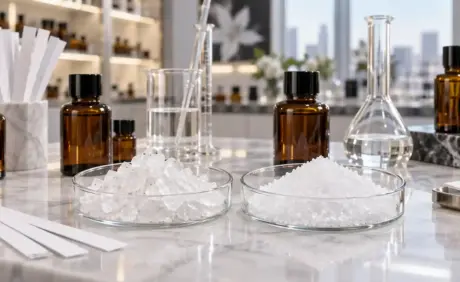
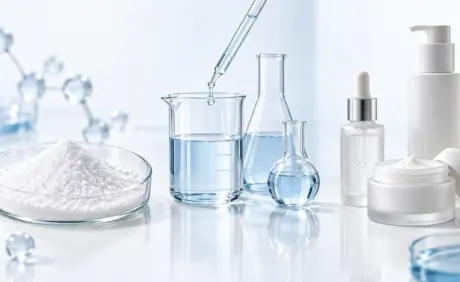
For cosmetic R&D, Hexamidine Diisethionate powder is most often discussed in the context of water-based antimicrobial formulations. Product teams may evaluate it in a facial cleanser, scalp-care wash, or selected leave-on concept for blemish-prone skin. Those are development options, not guaranteed uses; the complete formula, market rules, and finished-product evidence set the limits.
An antimicrobial ingredient does not automatically preserve every cream, and a cosmetic formula cannot borrow a disease-treatment claim from the raw material. The formula still needs testing, while the wording has to fit its market.
What is Hexamidine Diisethionate powder?
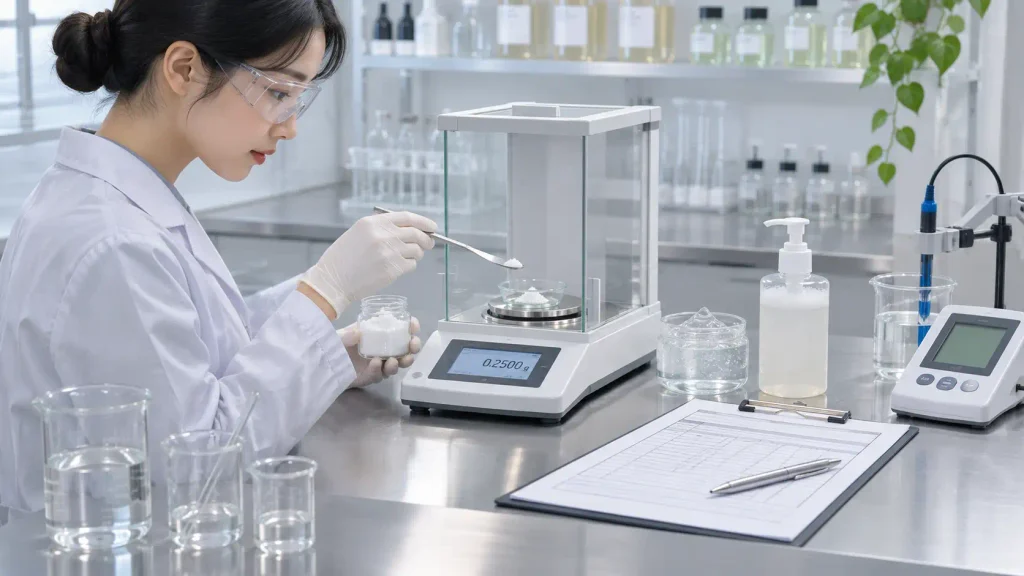
Hexamidine diisethionate is a salt form of hexamidine used as a cosmetic ingredient and mild antimicrobial agent. The material is listed under CAS 659-40-5. BWX Hexamidine Diisethionate is supplied as a white to off-white crystalline powder, with HPLC purity of at least 99% and ready solubility in water. Those traits make an aqueous phase a reasonable starting point for bench trials, although the finished base still needs compatibility checks.
Formulators comparing a specific Hexamidine Diisethionate raw material should verify the current specification and batch documentation before ordering. A product name alone cannot establish impurity limits, grade, or suitability for a particular market.
The ingredient is not a fragrance or an oil-phase emollient. It is most relevant when a formula brief includes microbial control or a skin-health concept. This is why product developers should assess it alongside the preservation system, surfactants, pH, packaging, and expected consumer use rather than selecting it from a single property on a specification sheet.
Where can it fit in a skincare product?
Facial cleansers and rinse-off products
Water-based cleansers are one practical starting point. A face wash or cleansing gel gives the powder an aqueous phase, and surfactants lift soil and residue during rinsing. A clear beaker sample is only the first check: salts, polymers, surfactants, and pH can change clarity, viscosity, or ingredient availability in the finished base.
The intended claim also needs to stay narrow. A cleanser may be developed for everyday skin hygiene or for skin prone to blemishes, but the ingredient should not be presented as a cure for acne. Product claims can change regulatory classification, especially when they imply treatment or prevention of a disease.
Scalp-care shampoos and cleansing products
Hexamidine salts have been discussed in the cosmetic literature for skin and personal-care applications, including antimicrobial-related uses. That makes scalp-care products a development concept to assess when the formula brief calls for microbial management. A shampoo, scalp cleanser, or rinse-off treatment may be considered depending on the market’s rules and the safety assessment for the intended exposure.
Avoid lifting a treatment claim from another market. “For a clean-feeling scalp” is not the same as claiming to treat a scalp condition. The final label, ingredient level, directions, and evidence should all support the same cosmetic positioning.
Blemish-prone skin formulas
Some product teams consider hexamidine diisethionate for blemish-prone skin concepts because of its antimicrobial profile. It may be evaluated in a rinse-off cleanser or a targeted cosmetic formula, provided the finished product is safe, stable, and suitable for its intended use. That is a formulation possibility, not a promise that the raw material clears acne.
The distinction is easy to miss in marketing copy. Words such as “cures,” “treats,” or “prevents acne” can cross into drug or therapeutic claims in some jurisdictions. Keep the brief focused on cosmetic support and have regulatory reviewers assess the exact product claims for each destination market.
Water-based serums, gels, and lotions
Because the powder is readily soluble in water, developers can assess it in the aqueous phase of a gel, serum, lotion, or emulsion. The formulator should test the actual addition order and processing conditions, then check pH, color, odor, viscosity, assay recovery, and stability over time. An ingredient that dissolves in water may still interact with other formula components or behave differently after heating, cooling, and packaging.
For products marketed as gentle or suitable for sensitive skin, the whole formula matters. Fragrance, surfactants, solvents, preservatives, application frequency, and contact time all affect tolerability. Do not turn one ingredient description into a blanket “sensitive-skin safe” promise.
A cleanser or lotion is one of several daily chemical formulations that still needs its own compatibility, safety, and stability review.
What Hexamidine Diisethionate can and cannot do
Its antimicrobial role can help a formulator evaluate microbial control, and published cosmetic literature discusses broader skin-health applications. But one raw material cannot guarantee preservation in every formula. Water activity, pH, packaging, manufacturing hygiene, other ingredients, and consumer handling all affect the final product’s microbial risk.
Use it as part of a documented formulation strategy. The finished product should undergo suitable preservative-efficacy or challenge testing in its intended packaging. Stability testing should also confirm that the formula continues to meet its agreed appearance, pH, viscosity, and assay specifications through the planned shelf life.
If the project is built around a specific skin benefit, the evidence should match the claim. Ingredient-level research can guide development, but it does not prove that every concentration or finished product will produce the same result. Avoid medical language unless the product is registered and substantiated for that category in the target market.
Formulation checks before scale-up
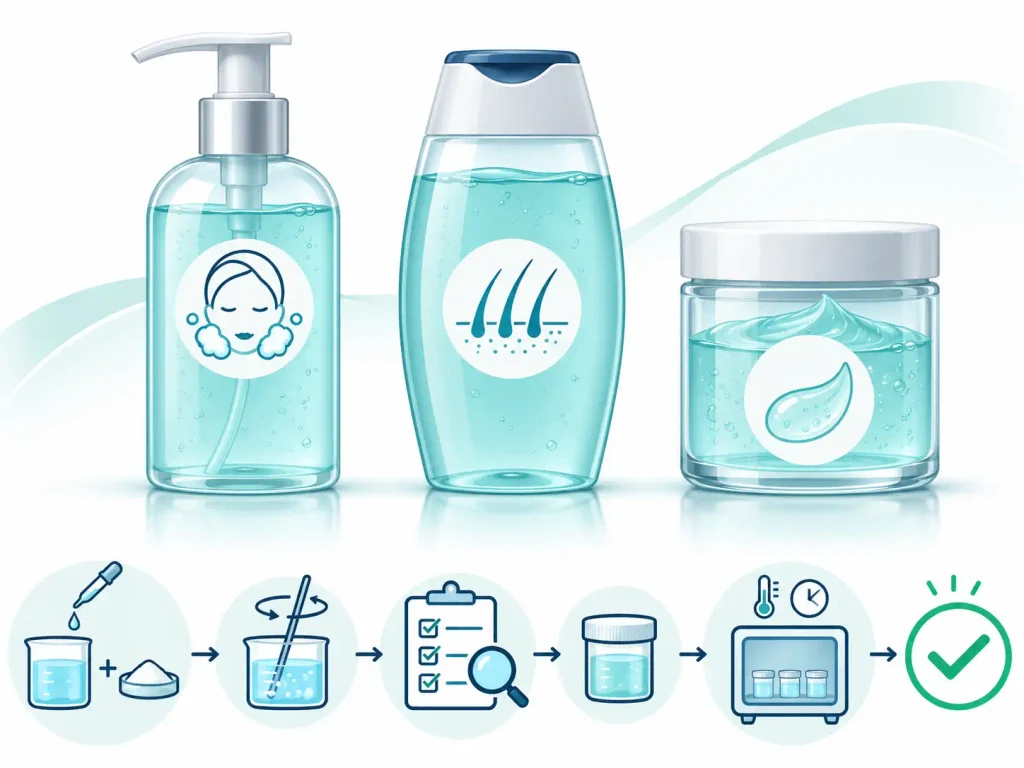
Begin with the formula, not a copied use level. Confirm the regulatory status and permitted conditions for the intended market, then run small-batch trials in the actual base. A practical development sequence looks like this:
- Confirm identity, assay method, and agreed impurity limits for the lot.
- Establish solubility and order of addition in the intended aqueous phase.
- Check compatibility with surfactants, polymers, salts, acids, and other antimicrobial ingredients.
- Monitor appearance, pH, viscosity, odor, and assay during stability testing.
- Test the finished product’s preservation performance in the final package.
- Review safety assessment, label language, and market-specific claim boundaries.
Do not assume that a supplier’s raw-material purity figure predicts preservation or consumer tolerability. The formulation team needs test results from the product it plans to manufacture and sell.
What should buyers request when sourcing the powder?
Confirm the full name and CAS number, then compare the current specification against the project’s required limits. BWX Hexamidine Diisethionate, CAS 659-40-5, is a white to off-white crystalline powder with HPLC purity of at least 99% and ready water solubility. Avoid relying on values copied from an older sheet; request the current specification and match it to the purchase order.
For an active ingredient, buyers commonly review individual and total impurity controls, residual solvents such as toluene and THF, heavy metals, and microbiological limits. A batch-specific HPLC chromatogram can help connect the delivered lot with the agreed assay and purity requirements. Request a current COA and supporting technical documents before qualification, and clarify which tests will appear on the commercial certificate.
Regular pack sizes are 1 kg per pack and 25 kg per drum, with customized packaging available. Keep the powder sealed in a cool, dry, ventilated place, away from moisture, direct sunlight, high temperatures, fire sources, and oxidizers. Confirm the packaging and storage conditions for the actual shipment rather than assuming that sample handling and bulk handling are identical.
For a sourcing review, the batch documentation and technical consultation process can help buyers identify which documents and specification limits need to be agreed before a pilot order. State the intended market, dosage form, and quality requirements when requesting the documents.
A sensible path from sample to production
Start with a laboratory sample and a written target formula. Record the amount added, order of addition, processing temperature, pH, and any change in appearance or viscosity. Then test the finished base, not only the ingredient in water. If the first trial passes, repeat the critical work in a pilot batch and run the required microbiological and stability testing in the final packaging.
That sequence helps separate a raw-material issue from a formula issue. It also gives procurement a concrete specification for the next order, including the exact document set, acceptance limits, and packaging instructions.
Developers who need a sample or current specification can request Hexamidine Diisethionate sourcing details from BWX and include the intended formulation type and destination market in the inquiry.
FAQ
What are the main skincare applications of Hexamidine Diisethionate?
It may be evaluated for water-based cleansers, scalp-care products, blemish-prone skin concepts, and selected aqueous leave-on formulas. The appropriate role depends on local rules and evidence from the finished product.
Is Hexamidine Diisethionate water-soluble?
The product is readily soluble in water and slightly soluble in ethanol and other organic solvents. Confirm dissolution and compatibility in the complete base.
Can Hexamidine Diisethionate be marketed as an acne treatment?
Do not present it as a cure for acne. Cosmetic language should stay within the intended market’s claim rules, and any treatment claim requires a separate regulatory and evidence review.
Does it replace a preservative challenge test?
No. Ingredient selection does not establish preservation performance for every product. Test the finished formula in its intended packaging using an appropriate challenge or preservative-efficacy method.
What documents should bulk buyers request?
Request a current specification and COA, HPLC chromatogram where available, SDS, TDS, impurity and residual-solvent limits, heavy-metal and microbiological requirements, and packaging and storage details.